Muchos afirman que la elección del ahora conocido como Benedicto XVI fue buena porque él guardará los dogmas de la iglesia. Aquí sería buena aclarar algo: lo que la iglesia debe guardar es el mensaje de Jesús, es decir el Evangelio. Cómo se instrumenta la comprensión del evangelio es otro asunto: si se va a transmitir por misionero a pie o en mula, por libros, radio, tele, internet, etc... La iglesia cambia, ha cambiado y cambiara la forma en que actualiza, encarna el evangelio al tiempo histórico del momento. Algunos ejemplos: Durante siglos la iglesia católica no habló en contra de la esclavitud, sino hasta el siglo XIX. Durante siglos la comprensión de la iglesia sobre el evangelio era que la Tierra era el centro de universo, Juan Pablo II le pidió disculpas a Galileo, y también a Darwin por la negación de la evolución. Antes la iglesia decía que paar esparcer al evangelio se valía matar en su nombre, por ellos las cruzadas; la iglesia también ya pidió perdón por ellas. La iglesia antes condenaba a los judíos por la muerte de Jesús, y ya les pidió perdón. Antes pensaba que era licita la tortura para salvar almas, el anterior Papa pidió disculpas por la Inquisición. Es decir: la comprensión de la iglesia del mensaje de Jesús avanza, nunca se detiene, no es estática sino dinámica. Pero el cambio por el cambio no es lo que importa. Comenta sobre ésto mismo Andrew Sullivan hoy:
THE ISSUE IS OXYGEN: The issue is not change itself. The Church has changed dramatically - and will continue to change dramatically. The issue now is whether the Church can even debate its own issues and future. Some caricatures of my position, for example, say that I oppose this Pope because I want the Church to endorse gay marriage. Puhlease. I cannot see any basis within Catholic theology for granting the sacrament of marriage to gay couples. Such a simple inclusion strikes me as completely out of bounds. What many of us are asking for is simply the ability for lay Catholics and indeed priests and theologians to be able to debate respectfully such pressing issues as mandatory celibacy for the priesthood, a less rigid biological understanding of the rights and dignity of women, and a real dialogue with gay Catholics about how we can practically live lives that reflect our human dignity and our profound human need for intimacy and sexual expression. We'd also like to see greater autonomy for national churches, a respect for political secularism, and a more open hierarchy that cannot get away with a criminal conspiracy to hide the widespread sexual abuse of children and teens. None of this is that radical in the context of change in the last fifty years. None of it is subject to infallibility. And what we object to is the arrogant notion that lay people - let alone theologians or priests - do not even have the right to raise these questions within a formal church context. But our opponents want to construct a straw man in which Ratzinger presents orthodoxy and critics represent revolution. The truth is almost the direct opposite. Ratzinger's views on freedom of thought within the church are deeply authoritarian; his views on what conscience is are totalitarian; his conflation of his own views with the Holy Spirit are offensive. But he is Pope now. And fairness suggests we should wait and see. I can only say that I do so with dread and fear."
Así es, la iglesia ha cambiado mucho en dos mil años, y lo seguirá haciendo. La pregunta es: ¿porqué no se permite desde la jerarquía que los laicos hagan preguntas? Hacer preguntas no es pecado, y al contrario, parece que Jesús valoraba en sus apostoles una fe activa, y no solamente receptiva. Pensar es un don que Dios da, y lo que él da seguramente es para que se aproveche, y aproveche bien. Pero muchos en la jerarquía temen al pensamiento crítico libre. ¿Será que temen más bien por su poder, por perder sus privilegios?
miércoles, abril 20, 2005

Un intelectual gótico en tiempos barrocos
Así titula Enric Juliana su análisis sobre Joseph Ratzinger designado Papa para La Vanguardia. Un fragmento:
"La bondad implica también la capacidad de decir no". Esta frase -que muchos padres seguramente suscriben, hoy más que nunca- quizá evite la tentación de comenzar el perfil biográfico de Benedicto XVI afirmando, temerariamente, que la Iglesia católica, temerosa de no estar a la altura del legado de Juan Pablo II, asustada por el incierto curso del mundo y replegada sobre sí misma, ha optado por el Doctor No. Por el guardián de la ortodoxia que tantas veces ha dicho no en los últimos años: no al sacerdocio de las mujeres; no al reconocimiento de la homosexualidad como opción de la personalidad humana; no, por tanto, al reconocimiento de los matrimonios gays; no al laicismo como nueva religión contemporánea; no al relativismoc ultural; no incluso a cualquier pasión excesiva por la música rock: "Es una expresión de las pasiones elementales, que en las grandes manifestaciones musicales adoptan un carácter cultural; es un contraculto que se opone al culto cristiano..."
"... ¿Ha optado el cónclave por un pontificado frío, seguro y transitorio ante el riesgo de división y por miedo al futuro? ¿El pesimismo se está apoderando definitivamente del catolicismo? ("La Iglesia es una barca que hace aguas", dijo, ante la sorpresa general, en el último Via Crucis romano). El Papa Ratzinger, gótico en días barrocos, tiene la respuesta. En ocasiones los conservadores de hierro dan sorpresas."
Sorpresas nos da la vida, vaya que sí....
"La bondad implica también la capacidad de decir no". Esta frase -que muchos padres seguramente suscriben, hoy más que nunca- quizá evite la tentación de comenzar el perfil biográfico de Benedicto XVI afirmando, temerariamente, que la Iglesia católica, temerosa de no estar a la altura del legado de Juan Pablo II, asustada por el incierto curso del mundo y replegada sobre sí misma, ha optado por el Doctor No. Por el guardián de la ortodoxia que tantas veces ha dicho no en los últimos años: no al sacerdocio de las mujeres; no al reconocimiento de la homosexualidad como opción de la personalidad humana; no, por tanto, al reconocimiento de los matrimonios gays; no al laicismo como nueva religión contemporánea; no al relativismoc ultural; no incluso a cualquier pasión excesiva por la música rock: "Es una expresión de las pasiones elementales, que en las grandes manifestaciones musicales adoptan un carácter cultural; es un contraculto que se opone al culto cristiano..."
"... ¿Ha optado el cónclave por un pontificado frío, seguro y transitorio ante el riesgo de división y por miedo al futuro? ¿El pesimismo se está apoderando definitivamente del catolicismo? ("La Iglesia es una barca que hace aguas", dijo, ante la sorpresa general, en el último Via Crucis romano). El Papa Ratzinger, gótico en días barrocos, tiene la respuesta. En ocasiones los conservadores de hierro dan sorpresas."
Sorpresas nos da la vida, vaya que sí....
Benedicto XVI y su primera misa
Usando un lenguaje conciliatorio como forma, el nuevo Papa realizó su primera misa hoy, reporta el New York Times.
"He specified some of the top priorities of his papacy: the promotion of the unity of Christians and a commitment to ecumenism, the continued dialogue with other religions and the fulfillment of the reforms of the Second Vatican Council.
"He specified some of the top priorities of his papacy: the promotion of the unity of Christians and a commitment to ecumenism, the continued dialogue with other religions and the fulfillment of the reforms of the Second Vatican Council.
Speaking in Latin, as is customary, in the brightly frescoed Sistine Chapel, where he was elected only a day before, the former Cardinal Joseph Ratzinger, 78, also made repeated references to his predecessor, Pope John Paul II, confirming that his own papacy would be one of continuity.
He told the gold-robed cardinals in attendance that he would assume as his primary task the "full and visible unity of all the followers of Christ."
More than a task, he said, it was a duty where "concrete gestures" were required and not vague motions of good sentiment.
For more than two decades at the head of the Congregation for the Doctrine of the Faith, Cardinal Ratzinger was Catholicism's faithful doctrinal watchdog, and in a homily on Monday he said that Christians were being tossed about by the waves of Marxism, collectivism, libertinism and atheism.
And he was highly critical of the creation of new "sects," a term often used by church leaders to refer to Christian evangelical movements, drawing Christians into what he said was "error."
But in his first homily as pontiff he took a much softer stance, saying he was disposed "to do what was in his power to promote the fundamental cause of ecumenism."
And in a gesture perhaps intended to allay the fears of those critics who saw his election as shutting the door on the inter-religious dialogue started by his predecessor, Pope Benedict appealed to "those who follow other religions," reassuring them that the church wanted to continue to construct "an open and sincere dialogue" with them.
He also promised to continue carrying out the Second Vatican Council, "in the wake of my predecessors and in faithful continuity with the bi-millenary tradition of the church.
Forty years after the end of the council that radically reformed the church, he said, "the council documents have not lost their actuality," and their teachings are particularly important to the current petitions of the church and today's "globalized society."
The 265th leader of the Roman Catholic Church made frequent references to his predecessor, John Paul II, and to the immense outpouring of public affection that accompanied his final illness and death. The late pope, he said, left a church that is "more courageous, more free and more young."
His final thoughts in the homily were for the young, and Pope Benedict said he looked forward to meeting "the future and hope of the church and humanity" in Bonn next August for World Youth Day. He pledged to continue the dialogue launched by his predecessor, and promised to listen to their expectations."
Veremos si la reconciliación viene, pero como dicen, los malos hábitos - como el de perseguir a los teólogos por pensar - no mueren... Y triste es ver que nunca dijo una palabra importante: "mujeres". Como dice Foucault, quien nombra manda, y lo no nombrado también importa, y quizá más.
martes, abril 19, 2005
Frases famosas de Joseph Ratzinger
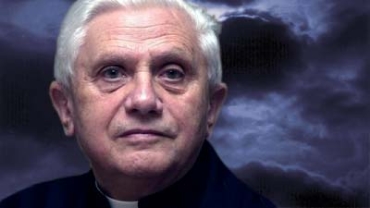
Estas son algunas de sus fraces célebres, recopiladas por El Mundo.
«No me gustaría decir en qué sentido interviene el Espíritu Santo en la elección del Papa, porque está claro que hay muchos ejemplos de pontífices en los que no ha tenido nada que ver» - como en este caso!!! :-)
«El ateísmo moderno y el secularismo deshumanizante son las plagas de nuestro tiempo»
«Los católicos deben estar atentos y vigilantes, porque existen fuerzas y grupos que quieren destruir la fe» - si como El....
«La homosexualidad es un desorden objetivo. La Iglesia debe acoger con respeto, compasión y delicadeza a las personas homosexuales, pero exigiéndoles que vivan en castidad» - ¿desorden objetivo según qué asociación científica? No hay una categoría en alguna seria...
«La bondad implica también la capacidad de decir no» - como decirle a un hombre que no ame a otro, o a una mujer que porfavor no ame a otra...
«Yo no soy el Gran Inquisidor» - eso lo dice Usted...
«El rock es la expresión de pasiones elementales, que en las grandes concentraciones musicales adoptaron caracteres culturales, es decir, de contraculto, de lo que se opone al culto cristiano» - Ajá... No conoce al rock cristiano acaso? No conoce acaso a U2? Bono era amigo de su jefe. Piense y luego hable...
«Los regímenes comunistas que llegaron al poder en nombre de la liberación del pueblo son una vergüenza de nuestro tiempo» - como Castro... ya ve cuando quiere sí dice cosas inteligentes....
«El hundimiento del comunismo no certifica automáticamente la bondad del capitalismo» - así es.... bien!
«El laicismo no puede ser una religión universal, porque es parcial y no responde a las preguntas del ser humano» - el laicismo no es una religión, es sólo una sana separación para evitar la teocracia de ayatollas como usted...
«La quema de herejes es una culpa que nos tiene que hacer pensar y dirigir nuestro arrepentimiento» - Ojalá!
«La razón no se salvará sin la fe, pero la fe sin la razón no será humana. Cuando el hombre se aparta de Dios, no es Dios quien le persigue, sino los ídolos» - corran! me persigue Pac Man!
«No tenemos que buscar un Cristo inventado, sólo en la comunión de la Iglesia encontraremos al verdadero Cristo» - en cuál de todas las iglesias? en la suya? porqué?
«La verdad no se determina mediante un voto de la mayoría» - ¿como en su elección?
«Sólo en la Iglesia Católica existe la salvación eterna» - ¿y los judíos? y los budistas? Y todos los demás qué?
«Cuánta suciedad hay en la Iglesia y también entre aquellos que se deben entregar a la causa del sacerdocio y pertenecer completamente a ella. Cuánta soberbia, cuánta autosuficiencia» - ¿como el Padre Maciel... ¡Ya haga la investigación!
«Soy un humilde servidor en la viña del Señor» - Así sea!
PD. Da alegría al Opus Dei la elección de Ratzinger. Pues claro! "Mientras que los numerarios (laicos que viven en casas del Opus y prometen celibato y darle su dinero) sigan sangrándose con el cilicio nosotros les editamos las cartas que les envían sus familiares y amigos... no deben pensar en dejarnos, cómo eso!? Que el nuevo Papa nos va a proteger! Ay, como extrañamos a Aznar. El nos dió tanto dinero..."
Benedicto XVI hizo menos el abuso de padres pederastas
Dijo cuando era cardenal que sólo había sido una campaña contra la iglesia el hecho de que miles de niños hayan sido abusados sexualmente por sacerdotes. Pero psicólogos de Estados Unidos no están tan seguros, reportó el National Catholic Reporter:
"... “The percentage of these offenses among priests is not higher than in other categories, and perhaps it is even lower,” said Cardinal Joseph Ratzinger, who heads the Vatican’s Congregation for the Doctrine of the Faith.
He made the remark Dec. 9 in answer to a question about a comment he had made Nov. 30 in Murcia, Spain.
“In the United States, there is constant news on this topic, but less than 1 percent of priests are guilty of acts of this type,” he said Nov. 30. His comments were first reported by Catholic News Service.
“The constant presence of these news items does not correspond to the objectivity of the information or to the statistical objectivity of the facts,” he said. “Therefore, one comes to the conclusion that it is intentional, manipulated, that there is a desire to discredit the church.”
However, according to psychologists, Ratzinger’s assertion that the number of offending priests is no higher than in other professions has never been supported by research, because no such research has been done, according to psychologists.
Fr. Stephen Rossetti, a psychologist and president of St. Luke Institute in Silver Spring, Md., who has served as consultant for the U.S. Bishops’ Ad Hoc Committee on Sexual Abuse, addressed the issue in America magazine April 25: “There are simply no prevalence rates of perpetration of child sexual abuse either in society at large or in the priesthood. The reason for the lack of data is inherent in the crime. It is very difficult to gather a sample of adult males and ask them if they have ever sexually abused a minor.”
Psychologist A.W. Richard Sipe told NCR he doubts the accuracy of Ratzinger’s pronouncement that “less than 1 percent” of priests is guilty of abuse. Sipe said the bishops’ office in Washington has in the past created such statistics by only including priests whose history of abuse has become public knowledge and withholding information about “a number of offenders who are not publicly known.”
Sipe, whose years of study of sexuality and the priesthood have led him to estimate that between 4 and 5 percent of U.S. priests have sexually abused minors, said that Ratzinger’s comments miss “the core of the problem. The core is the revelation of systemic corruption. It isn’t about bad priests. It is about a system that is hypocritical at its core. The faithful are up in arms because the system builds on and fosters a kind of hypocrisy.”
Este es la nueva cabeza de la iglesia católica: un encubridor, un solapador del crimen realizado a miles de niños durante sus años como supuesto guardián de la fe. No cometamos ahora nosotros el crimen de olvidar a la historia...
"... “The percentage of these offenses among priests is not higher than in other categories, and perhaps it is even lower,” said Cardinal Joseph Ratzinger, who heads the Vatican’s Congregation for the Doctrine of the Faith.
He made the remark Dec. 9 in answer to a question about a comment he had made Nov. 30 in Murcia, Spain.
“In the United States, there is constant news on this topic, but less than 1 percent of priests are guilty of acts of this type,” he said Nov. 30. His comments were first reported by Catholic News Service.
“The constant presence of these news items does not correspond to the objectivity of the information or to the statistical objectivity of the facts,” he said. “Therefore, one comes to the conclusion that it is intentional, manipulated, that there is a desire to discredit the church.”
However, according to psychologists, Ratzinger’s assertion that the number of offending priests is no higher than in other professions has never been supported by research, because no such research has been done, according to psychologists.
Fr. Stephen Rossetti, a psychologist and president of St. Luke Institute in Silver Spring, Md., who has served as consultant for the U.S. Bishops’ Ad Hoc Committee on Sexual Abuse, addressed the issue in America magazine April 25: “There are simply no prevalence rates of perpetration of child sexual abuse either in society at large or in the priesthood. The reason for the lack of data is inherent in the crime. It is very difficult to gather a sample of adult males and ask them if they have ever sexually abused a minor.”
Psychologist A.W. Richard Sipe told NCR he doubts the accuracy of Ratzinger’s pronouncement that “less than 1 percent” of priests is guilty of abuse. Sipe said the bishops’ office in Washington has in the past created such statistics by only including priests whose history of abuse has become public knowledge and withholding information about “a number of offenders who are not publicly known.”
Sipe, whose years of study of sexuality and the priesthood have led him to estimate that between 4 and 5 percent of U.S. priests have sexually abused minors, said that Ratzinger’s comments miss “the core of the problem. The core is the revelation of systemic corruption. It isn’t about bad priests. It is about a system that is hypocritical at its core. The faithful are up in arms because the system builds on and fosters a kind of hypocrisy.”
Este es la nueva cabeza de la iglesia católica: un encubridor, un solapador del crimen realizado a miles de niños durante sus años como supuesto guardián de la fe. No cometamos ahora nosotros el crimen de olvidar a la historia...
El proyecto de Ratzinger: una iglesia sólo de pocos
Desde antes de ser electo hablaba de crear una "minoría creativa". Ese es su proyecto como bien Sullivan declara:
"... This new Pope has no pastoral experience as such. He is a creature of theological discourse, a man of books and treatises and arguments. He proclaims his version of the truth as God-given and therefore unalterable and undebatable. His theology is indeed distinguished, if somewhat esoteric and at times a little odd. But his response to dialogue within the church is to silence those who disagree with him. He has no experience dealing with people en masse, no hands-on experience of the challenges of the church in the developing world, and complete contempt for dissent in the West. His views on the subordinate role of women in the Church and society, the marginalization of homosexuals (he once argued that violence against them was predictable if they kept pushing for rights), the impermissibility of any sexual act that does not involve the depositing of semen in a fertile uterus, and the inadmissability of any open discourse with other faiths reveal him as even more hardline than the previous pope. I expected continuity. I didn't expect intensification of the fundamentalism and insularity of the current hierarchy. I expect an imminent ban on all gay seminarians, celibate or otherwise. And I expect the Church's immersion in the culture wars in the West - on every imaginable issue. For American Catholics, I foresee an accelerating exodus. But that, remember, is the plan. The Ratzingerians want to empty the pews in America and start over. They will, in that sense, be successful."
Y no sólo quieren que los americanos se vayan de la iglesia, sino todos los católicos que piensen por sí mismos.
"... This new Pope has no pastoral experience as such. He is a creature of theological discourse, a man of books and treatises and arguments. He proclaims his version of the truth as God-given and therefore unalterable and undebatable. His theology is indeed distinguished, if somewhat esoteric and at times a little odd. But his response to dialogue within the church is to silence those who disagree with him. He has no experience dealing with people en masse, no hands-on experience of the challenges of the church in the developing world, and complete contempt for dissent in the West. His views on the subordinate role of women in the Church and society, the marginalization of homosexuals (he once argued that violence against them was predictable if they kept pushing for rights), the impermissibility of any sexual act that does not involve the depositing of semen in a fertile uterus, and the inadmissability of any open discourse with other faiths reveal him as even more hardline than the previous pope. I expected continuity. I didn't expect intensification of the fundamentalism and insularity of the current hierarchy. I expect an imminent ban on all gay seminarians, celibate or otherwise. And I expect the Church's immersion in the culture wars in the West - on every imaginable issue. For American Catholics, I foresee an accelerating exodus. But that, remember, is the plan. The Ratzingerians want to empty the pews in America and start over. They will, in that sense, be successful."
Y no sólo quieren que los americanos se vayan de la iglesia, sino todos los católicos que piensen por sí mismos.
Sitioweb predice nombre escojido por Ratzinger
Catholicplanet.com , sitio católico extremista, usando la profecía de San Malaquías parece que acertó, y parace que también el profeta. Chequé el caché del site en google y es anterior a la noticia del nuevo papa. Freacky.....
"The First Pope After John Paul II
Pope #111 on St. Malachy's list is given the phrase: “From the Glory of the Olive.” This prophetic phrase has several meanings which correctly apply to the next Pope after John Paul II.
a. What is the glory of the olive? The olive branch is a well-known symbol of peace. The glory of the olive is peace. The next Pope after John Paul II will be a man of great peace. Peace will be his banner, peace will be his work, peace will be his goal. He will seek peace among individuals, among nations, among Catholics, between Catholics and other Christians, and between Catholics and adherents of other religions. The next Pope after John Paul II will have a Pontificate distinguished for seeking Peace around the world. He is correctly called the Pope of Peace.
St. Malachy's prophecy about John Paul II fit his Pontificate well, once it began. But, before being elected Pope, Karol Wojtyla did not distinguish himself by traveling constantly. The next Pope after John Paul II may not have distinguished himself yet in works of peace-making. Or, he may have distinguished himself in peace-making in God's eyes, but not yet in the eyes of the world.
b. Some say that this prediction of St. Malachy, “From the Glory of the Olive,” refers to the Order of St. Benedict, because they have a well-known group within their order called the 'Olivetans.' There is some merit to this idea. But it does not mean that this Pope will come from the Order of St. Benedict, but rather that he will take the name of Saint Benedict and will live in imitation of him.
c. The next Pope after John Paul II will take the name Pope Benedict XVI, in imitation of Saint Benedict and also of Pope Benedict XV. Just as Pope Benedict XV was an emissary of peace, so will Pope Benedict XVI be an emissary of peace. Just as Pope Benedict XV sought peace and spoke of peace and wrote papal documents seeking peace, so will Pope Benedict XVI do also. Just as Pope Benedict XV failed to achieve peace in the world, so will Pope Benedict XVI fail to achieve peace in the world. Just as the Pontificate of Benedict XV began prior to World War I, so will the Pontificate of Benedict XVI occur prior to World War III. After the Pontificate of Benedict XVI, World War III will begin. The Arab nations will threaten and attack the United States; they will threaten, attack, invade and conquer Europe..."
"The First Pope After John Paul II
Pope #111 on St. Malachy's list is given the phrase: “From the Glory of the Olive.” This prophetic phrase has several meanings which correctly apply to the next Pope after John Paul II.
a. What is the glory of the olive? The olive branch is a well-known symbol of peace. The glory of the olive is peace. The next Pope after John Paul II will be a man of great peace. Peace will be his banner, peace will be his work, peace will be his goal. He will seek peace among individuals, among nations, among Catholics, between Catholics and other Christians, and between Catholics and adherents of other religions. The next Pope after John Paul II will have a Pontificate distinguished for seeking Peace around the world. He is correctly called the Pope of Peace.
St. Malachy's prophecy about John Paul II fit his Pontificate well, once it began. But, before being elected Pope, Karol Wojtyla did not distinguish himself by traveling constantly. The next Pope after John Paul II may not have distinguished himself yet in works of peace-making. Or, he may have distinguished himself in peace-making in God's eyes, but not yet in the eyes of the world.
b. Some say that this prediction of St. Malachy, “From the Glory of the Olive,” refers to the Order of St. Benedict, because they have a well-known group within their order called the 'Olivetans.' There is some merit to this idea. But it does not mean that this Pope will come from the Order of St. Benedict, but rather that he will take the name of Saint Benedict and will live in imitation of him.
c. The next Pope after John Paul II will take the name Pope Benedict XVI, in imitation of Saint Benedict and also of Pope Benedict XV. Just as Pope Benedict XV was an emissary of peace, so will Pope Benedict XVI be an emissary of peace. Just as Pope Benedict XV sought peace and spoke of peace and wrote papal documents seeking peace, so will Pope Benedict XVI do also. Just as Pope Benedict XV failed to achieve peace in the world, so will Pope Benedict XVI fail to achieve peace in the world. Just as the Pontificate of Benedict XV began prior to World War I, so will the Pontificate of Benedict XVI occur prior to World War III. After the Pontificate of Benedict XVI, World War III will begin. The Arab nations will threaten and attack the United States; they will threaten, attack, invade and conquer Europe..."
El triunfo del fundamentalismo abre al sXXI
Andrew Sullivan comenta hoy en dos textos sobre la designación del primer papa del siglo XXI:
"... Having a clear faith, based on the Creed of the Church, is often labeled today as a fundamentalism. Whereas, relativism, which is letting oneself be tossed and 'swept along by every wind of teaching', looks like the only attitude (acceptable) to today's standards. We are moving towards a dictatorship of relativism which does not recognize anything as for certain and which has as its highest goal one's own ego and one's own desires." - Pope Benedict XVI, yesterday. And what is the creed of the Church? That is for the Grand Inquisitor to decide. Everything else - especially faithful attempts to question and understand the faith itself - is "human trickery." It would be hard to over-state the radicalism of this decision. It's not simply a continuation of John Paul II. It's a full-scale attack on the reformist wing of the church. The swiftness of the decision and the polarizing nature of this selection foretell a coming civil war within Catholicism. The space for dissidence, previously tiny, is now extinct. And the attack on individual political freedom is just beginning...."
"THE FUNDAMENTALIST TRIUMPH: And so the Catholic church accelerates its turn toward authoritarianism, hostility to modernity, assertion of papal supremacy and quashing of internal debate and dissent. We are back to the nineteenth century. Maybe this is a necessary moment. Maybe pressing this movement to its logical conclusion will clarify things. But those of us who are struggling against what our Church is becoming, and the repressive priorities it is embracing, can only contemplate a form of despair. The Grand Inquisitor, who has essentially run the Church for the last few years, is now the public face. John Paul II will soon be seen as a liberal. The hard right has now cemented its complete control of the Catholic church. And so ... to prayer. What else do we now have?"
Este domingo será la misa primera de Benedicto XVI, veremos con atención qué homilía dice el hombre que seguramente dividirá más a la Iglesia Católica más de lo que está....
"... Having a clear faith, based on the Creed of the Church, is often labeled today as a fundamentalism. Whereas, relativism, which is letting oneself be tossed and 'swept along by every wind of teaching', looks like the only attitude (acceptable) to today's standards. We are moving towards a dictatorship of relativism which does not recognize anything as for certain and which has as its highest goal one's own ego and one's own desires." - Pope Benedict XVI, yesterday. And what is the creed of the Church? That is for the Grand Inquisitor to decide. Everything else - especially faithful attempts to question and understand the faith itself - is "human trickery." It would be hard to over-state the radicalism of this decision. It's not simply a continuation of John Paul II. It's a full-scale attack on the reformist wing of the church. The swiftness of the decision and the polarizing nature of this selection foretell a coming civil war within Catholicism. The space for dissidence, previously tiny, is now extinct. And the attack on individual political freedom is just beginning...."
"THE FUNDAMENTALIST TRIUMPH: And so the Catholic church accelerates its turn toward authoritarianism, hostility to modernity, assertion of papal supremacy and quashing of internal debate and dissent. We are back to the nineteenth century. Maybe this is a necessary moment. Maybe pressing this movement to its logical conclusion will clarify things. But those of us who are struggling against what our Church is becoming, and the repressive priorities it is embracing, can only contemplate a form of despair. The Grand Inquisitor, who has essentially run the Church for the last few years, is now the public face. John Paul II will soon be seen as a liberal. The hard right has now cemented its complete control of the Catholic church. And so ... to prayer. What else do we now have?"
Este domingo será la misa primera de Benedicto XVI, veremos con atención qué homilía dice el hombre que seguramente dividirá más a la Iglesia Católica más de lo que está....
Votantes del cónclave: 115 hombres, 0 mujeres
Y luego dice la jerarquía que la iglesia católica no discrimina a las mujeres, la mitad del pueblo de dios. ¿Y usted cree que Dios no quiere que puedan votar? Porfavor...
De este tema habla Tom Roberts en un excelente artículo publicado en The National Catholic Reporter:
"Earlier this week I had a conversation with a senior member of a religious order who remarked that by virtue of his position and familiarity with the Vatican, he could conceivably approach a number of cardinals and present his thoughts on issues in the church. But, he noted with regret, “No woman could do that.”
De este tema habla Tom Roberts en un excelente artículo publicado en The National Catholic Reporter:
"Earlier this week I had a conversation with a senior member of a religious order who remarked that by virtue of his position and familiarity with the Vatican, he could conceivably approach a number of cardinals and present his thoughts on issues in the church. But, he noted with regret, “No woman could do that.”
One gets the sense here that such awareness is neither part of normal discourse nor encouraged. This, in terms of church, is really a man’s town. The point is hammered home relentlessly during an interregnum. Papers, television, informal chat, requests for interviews, chatter among journalists, lectures, panels – all focus on 115 men. An endless stream of words, printed and spoken, as well as images are about these men.
There are no women.
So I admit to a feeling of more than mild relief when I caught a lecture Thursday by theologian Adriana Valerio, president of the European Society of Women in Theological Research and Professor of History of Christianity at the University of Naples.
The relief came with a sense that this small group in a room about a 10 minute walk from the Vatican at least acknowledges that a fair portion of the 50 percent of the church that is women (and the much larger percentage of women who, in most places, are the actual day-to-day face of the church) have some unsettled and unsettling business to bring to the table. Of course, they aren’t allowed near the table. That’s why they had to rent a room at the other end of the Via Conciliazione, the wide avenue that leads to the Vatican.
The event was, for me, a welcome dose of reality in a city where, in some quarters, the air now is thick with hagiography, the late pope’s true greatness slowly sinking beneath a breathless, almost tawdry wish that somehow John Paul II continue to reign from the grave. One can only wonder if the near worshipful tones (John Paul the Great! Santo Subito!) can withstand the test of time. Of course, much is at stake for some who have invested heavily in the past 26 years and for whom all questions are settled. Should the papacy go to someone tolerant of questions and discussion, more than lunch invitations to the papal palace are in the balance.
The status quo meanwhile, built on layers of assumptions, is especially dependent on the fact that women have no right to access – thus, practically speaking, they have no access – to any significant level of church governance or decision-making. [y vale decir que lo mismo se aplica a los sacerdotes honestos que admiten ser gays, y claro a todos los laicos].
There are no women.
Christianity, said Valerio, has fed on the “humble faith of women, on their spirit of sacrifice; it has been supported by the deep experiences that women gained of God as Trinity.” Because of a lack of interest and inadequate research, that history is being lost, she said.
“The new pope has the duty of encouraging the research and the preservation of female
memory and tradition, so that it may become patrimony of the whole church. We have to place side by side Fathers and Mothers of the church, male and female theologians, mystics and so on. The memory of women has to be given back to Christians, so that we can revive the history of thelogy, of spirituality, of the institutions.
No one I know expects any quick changes in the status of women or in such matters as ordination of married men or any of the other “hot button” issues. What many are hoping for, however, is precisely the kind of encouragement – to continue to do research, to preserve history, to update the church’s anthropological perspective on human nature, to deepen (and not be intimidated by) the dialogue with a variety of other disciplines – that Valerio and others advocate.
As noted author and NCR columnist Joan Chittister said in a talk in the same series the day after Valerio, “It should be recognized that women are half the church. The question is, ‘Where are they?’”
“Why do we have thousands of priestless parishes, thousands fewer seminarians and, at the same time, thousands of unemployed lay missioners – most of them women – unless it is more preferable to close parishes than to allow women to maintain the very lifeblood of a communal church?” she asked.
To some, I know, the “women’s issue” in the church is simply an irritant against which the strength of tradition and the theology that it has spawned will forever prevail. At the same time, it is difficult to see the advances in the understanding of women’s role in the world in virtually every other circumstance and conclude that there is something godly and holy forever about having women excluded from church leadership. History seems to be marching, as it did with Galileo on another topic far less apparent to the average eye, toward quite different conclusions.
“The women’s issue, like the question of blacks before it, puts to the test all the other major issues, insights and understandings in the church,” said Chittister. The authenticity of the church in the future, she said, will depend on its response to women.
In the meantime, the cardinals will slip into a conclave, and the world will await the results of the deliberations of 115 men. And there are no women."
¿Porqué la iglesia abandonó a los europeos?
El New York Times de hoy está muy interesante. Explica porqué Europa no ha abandonado a la iglesia católica solamente por capricho, pero más bien pregunta por qué la iglesica católica abandonó a los europeos. Una edición de los puntos sustanciales:
| |

The vast 100-year-old structure, built on the ruins of a 17th-century chateau, contains vaulted ceilings, stained-glass windows and hundreds of rooms. Pope John Paul II visited here in 1980 on a trip in which he chastised the French for abandoning the church.
But the seminary's corridors are dark, the individual living quarters largely empty. Only 52 seminarians are studying this year, a decrease of 50 percent from a decade ago. Many of them come from as far away as Vietnam and Rwanda.
"We could welcome more than 200 seminarians if they wanted to come," said the Rev. Jean-Luc Védrine, the 45-year-old superior. "Today there are young people in France who have never seen a priest."
Indeed, in all of France last year, only 90 priests were ordained, compared with 566 in 1966. More and more throughout Europe, priests are being forced to cover several parishes.
The Rev. Pascal Le Roux, for example, the 41-year-old pastor of the Notre-Dame Cathedral in Evreux in Normandy, must minister to two other area churches. Two dozen more under his authority have no priest and remain closed except for a few holidays and special occasions.
The shortage of priests is only one of the problems bedeviling the Catholic Church in Europe. The urgent need to revitalize it is cited as a major reason why the world's cardinals who opened their conclave in Rome on Monday to elect a new pope may choose a European.
During his 26-year papacy, John Paul II used the force of his personality in dozens of trips around the Continent to try to bring back European Catholics who had fallen away.
It was a disappointing exercise.
Among Catholics, only 10 percent in the Netherlands, 12 percent in France, 15 percent in Germany and Austria, 18 percent in Spain and 25 percent in Italy attend Mass weekly.
Granted, historical, demographic and cultural differences mean that the reasons vary from country to country. But in terms of an overall sense of spirituality on the Continent, there is a troubling trend.
Only 21 percent of Europeans say that religion is "very important" to them, according to the often-cited European Values Study, conducted in 1999 and 2000 and published two years ago. A similar survey in the United States by the Pew Forum on Religion and Public Life put the number at nearly 60 percent.
The trend away from regular participation has been so noticeable that it has even been given a name: European apostasy.
"European Catholics are not against the Catholic Church," said Ulrich Ruh, editor of the Catholic monthly Herder-Korrespondenz, based in Freiburg, Germany. "They go to church at least once or twice a year and bring their children to be baptized and confirmed. Rather, they have made their own personal arrangements with the church and do not want to be disturbed. They do not want to be evangelized. That is why the pope failed to make the church more attractive."
Part of the problem is the church's emphasis on punishment and sin rather than on inclusion and community. [Pregúntenle a los divorciados, a los jóvenes que viven en unión libre, a gays y lesbianas, a las madres solteras... ]
On the trip to France in 1980, early in his tenure, for example, Pope John Paul referred to the country by its historic title and asked, "Eldest daughter of the church, what have you done with your baptism?"
That approach, which some here dismiss as paternalistic, alienates many of Europe's Catholics, who insist that it is the church's leaders - not the faithful - who must change.
"They still think they have the truth and that their truth must be imposed on everyone," said Didier Vanhoutte, former president of the Fédération des Reseaux du Parvis, an umbrella organization of 41 Catholic reform movements across Europe. "They haven't accepted the limits of their power. They have to get closer to the people by accepting a certain degree of poverty and, certainly, humility."
More than their American counterparts, Europe's Catholics disregard the church's teachings on an array of moral and sexual issues, including abortion, embryonic stem cell research, in vitro fertilization, sex outside marriage and homosexuality.
The Netherlands allows same-sex marriage and several other countries - including France, Denmark, Belgium, Norway, Sweden and Finland - offer some sort of same-sex de facto marital contract. Some countries - including Spain, Belgium, Germany, Switzerland and Denmark - have liberalized euthanasia laws.
The trend away from organized Catholicism is sharpest among European youth. In Spain, a poll of university students by the BBVA Foundation in March indicated that of the institutions playing a prominent role in Spanish life, the Catholic Church inspired the least amount of confidence. Only 45 percent consider themselves Catholic, compared with 80 percent of Spain's population as a whole.
Today, the poll concluded, most university students "disagree with the statement that, 'The teachings of the Catholic Church help us to live more morally.' "
Y que se esperen al futuro si es que Ratzinger o alguien de su grupo es electo Papa, no sólo Europa dejará a Roma sola, sino toda la cristiandad.lunes, abril 18, 2005
¿Durará la democracia en Roma?
Los cónclaves son anómalos momentos de democracia en la Iglesia Católica. Antes los obispos eran electos por los sacerdotes de su región, pero ya no es así. Roma cada vez decide más cosas centralizando más y más poder en una era en la que lo que el mundo pide es subsidiaredad, uno de los principales principios de la Unión Europea por ejemplo. ¿Qué quiere decir? Que si una decisión se puede tomar mejor a nivel local, se tome así. Y algunos ya lo están pensando seriamente en la misma iglesia católica. Sólo falta que halla un Papa que decida regresar poder al pueblo. Ustedes se preguntarán cuál pueblo, si la iglesia es una jerarquía no es así? Sí y no. La iglesia católoca es gobiernada por una jerarquía patricarcal blanca - menos por un puñado - y gerontrocrática, sí, pero tiene un pueblo, los laicos. Y la palabra es muy adecuada: "laico" viene del latín "laos", pueblo. Los laicos son - somos - el pueblo de Dios. ¿Ojalá la jerarquía recordará eso más seguido no? Ojalá lo recuerden ahora que están encerrados en la capilla sixtina.
Unos números interesantes sobre el tiempo que han tomado las elecciones de los últimos papas:
1978. Juan Pablo II. Tres días y ocho votaciones.
1978. Juan Pablo I. Dos días y cuatro votaciones.
1963. Pablo VI. Tres días y seis votaciones.
1958. Juan XXIII. Cuatro días y once votaciones.
1939. Pío XII. Dos días y tres votaciones.
Llevamos un día - al lunes 18 de abril - y una votación. Veremos hasta dónde llegamos...
Unos números interesantes sobre el tiempo que han tomado las elecciones de los últimos papas:
1978. Juan Pablo II. Tres días y ocho votaciones.
1978. Juan Pablo I. Dos días y cuatro votaciones.
1963. Pablo VI. Tres días y seis votaciones.
1958. Juan XXIII. Cuatro días y once votaciones.
1939. Pío XII. Dos días y tres votaciones.
Llevamos un día - al lunes 18 de abril - y una votación. Veremos hasta dónde llegamos...
Ratzinger da ordenes al futuro Papa
En el colmo de la arrogancia y la soberbia, al cardenal Ratzinger se le ocurrió en la misa previa al cónclave ante sus otros 114 colegas, dar practicamente ordenes a lo que el futuro papa debería hacer:
"Según el experto en temas religiosos de EL MUNDO, José Manuel Vidal, Ratzinger "ha ejercido como Papa" durante la ceremonia. De hecho, el cardenal alemán ha bendecido de la misma manera que solía hacerlo Juan Pablo II, y ha aprovechado la homilía para "presentar su programa electoral, para él mismo si saliera elegido Papa o para quien él proponga como sucesor de San Pedro".
Ratzinger se ha convertido pues en el 'hombre del día' en la Ciudad del Vaticano, tras la dura homilía con tintes apocalípticos.
Dirigió duras palabras a lo que llamó "dictadura del relativismo" que, según él, se vive en la actualidad, "no reconoce nada como definitivo y que deja solo al propio yo con sus deseos". Por ello, criticó "todos los vientos de doctrina que hemos conocido en estos últimos decenios" e instó a los cardenales a defender, frente a todo ello, la doctrina de la Iglesia Católica.
"Cuántas corrientes ideológicas, cuántas modas del pensamiento. La pequeña barca del pensamiento de muchos cristianos ha sido agitada por estas olas, que van de un extremo a otro, desde el marxismo, al liberalismo, pasando por el libertinaje, al colectivismo, al individualismo radical, desde el ateísmo al un vago misticismo religioso", dijo Ratzinger, uno de los cardenales con más poder y uno de los favoritos para ser el nuevo Papa. "
Fijénse que dijo todos los ismos menos uno: el conservadurismo. Y todo en nombre de Dios, claro...
"Según el experto en temas religiosos de EL MUNDO, José Manuel Vidal, Ratzinger "ha ejercido como Papa" durante la ceremonia. De hecho, el cardenal alemán ha bendecido de la misma manera que solía hacerlo Juan Pablo II, y ha aprovechado la homilía para "presentar su programa electoral, para él mismo si saliera elegido Papa o para quien él proponga como sucesor de San Pedro".
Ratzinger se ha convertido pues en el 'hombre del día' en la Ciudad del Vaticano, tras la dura homilía con tintes apocalípticos.
Dirigió duras palabras a lo que llamó "dictadura del relativismo" que, según él, se vive en la actualidad, "no reconoce nada como definitivo y que deja solo al propio yo con sus deseos". Por ello, criticó "todos los vientos de doctrina que hemos conocido en estos últimos decenios" e instó a los cardenales a defender, frente a todo ello, la doctrina de la Iglesia Católica.
"Cuántas corrientes ideológicas, cuántas modas del pensamiento. La pequeña barca del pensamiento de muchos cristianos ha sido agitada por estas olas, que van de un extremo a otro, desde el marxismo, al liberalismo, pasando por el libertinaje, al colectivismo, al individualismo radical, desde el ateísmo al un vago misticismo religioso", dijo Ratzinger, uno de los cardenales con más poder y uno de los favoritos para ser el nuevo Papa. "
Fijénse que dijo todos los ismos menos uno: el conservadurismo. Y todo en nombre de Dios, claro...
¿La nube hará dos soles ver?
Un análista de simbología famoso en la red, Goro Adachi, afirma que eso puede ocurrir con este cónclave, y que también ya eso lo veía Nostradamus. Pero primero lo primero:
1. Este es no es un cónclave común y corriente.
2. Es el primero del siglo XXI.
3. Sucede después de un pontificado de casi 27 años de uno de los Papas más admirados y odiados de la historia a la vez. Su obra a moldeado a la iglesia católica en más de un sentido, para bien y para mal.
4. El organizador de su funeral y del cónclave mismo, el cardenal Ratzinger, es el cardenal más conservador, cuestión que lo hace muy polarizante. Más es uno de los grandes favoritos.
5. Y el cónclave ocurre dos días antes del aniversario del nacimiento de Adolfo Hitler...
Ahora sí, vayamos al análisis simbólico de Goro:
Afirma que más allá de la profecía de San Malaquías, que parece cumplirse debido a que el funeral de JP2 "coincidió" con un eclipse... el próximo Papa en su lista se apoda La Gloria del Olivo, referente a un candidato judío, y el único con ese origen es el ex arzobispo de París, Jean Marie Lustiger. Pero Adachi cuenta que no sólo la profecía lo favorece, sino su relación misma con esa ciudad-amuleto dedicada a la diosa Isis: París. El cuenta que todas las centurias de Nostradamos dos parecen las que más parecen hablar de esta transición en el papado:
Century II - 41
La grand' estoille par sept jours bruslera,
Nuee fera deux soleils apparoir:
Le gros mastin toute nuit hurlera,
Quand grand pontife changera de terroir.
The great star will burn for seven days,
The cloud will make double sun appear:
The large mastiff will howl all night
When the great pontiff changes his abode.
Century II - 48
La grand copie qui passera les monts.
Saturne en l'Arq tournant du poisson Mars:
Venins cachez soubs testes de saumons,
Leurs chief pendu a` fil de polemars.
The great army which will pass the mountains.
Saturn in the Arc turning from/of the fish Mars:
Poison hidden under the heads of salmon,
Their chief hung with cord of polemars.
¿Porqué las centurias II-41 y II-48?
La II-41 , afirma que el gran mastín aullará, referencia directa a la estrella Sirio - Canis Major - la estrella del perro, que se vió todas las noches sobre el horizontes desde el 5 de Febrero. Y eso marcaría cuando el "gran pontífice cambiara de ropajes", es decir, muriera. Y de su entierro al juramento de todos los involucrados en el cónclave pasaron siete días exactos, en los que "la gran estrella brilló", la concordia... pero quizá eso no dure, porqué "la nube hará dos soles ver". La nube es la confusión que podría hacer que terminemos con ¿dos Papas? O quizá una enorme división.
La centuria II-48 habla del mapa de París, dice Goro. El corazón de la ciudad es el eje Défense-Louvre, lo que antes era el primer meridiano, o como recordó el Código da Vinci, la Línea Rosa. El eje a partir de El Arco del Triunfo se alinea 26 grados al sureste para sincronizarse con la estrella de la patrona de la ciudad, Sirio de nuevo. Los números de la centuria 2-48 afirma Goro corresponden a las coordenas mismas de París en los mapas actuales:
Brillante es decir lo menos.
La centuria termina con dos frases extrañas: "veneno escondido bajo las cabezas de salmón, su jefe colgado con cuerda del "polemars"."
Creo yo que las cabezas de salmón, son los cardenales - no por nada Jesús es el pescador de hombres, y los cardenales son pescados caros... El polo de marte es la torre Eiffel que está en el campo de Marte, pero ¿qué quiere decir que el jefe será colgado en ella? La torre es el faro de la Ciudad Luz, que marca el tiempo. ¿Será que su jefe estará ligado a París acaso? Ser designado Papa no por nada es una muerte a una vida, y el inicio a otra...
Goro cuenta más cosas interesantes, pero creo que estas interpretaciones mías y del él son las esenciales por ahora. Aunque no olvidemos Ratzinger. Su posible pasado nazi me produce dudas de que deje que un judío - aunque sea converso - reine en la iglesia. Ya veremos...
PD. Algo más, según Wikipedia, ante la caída, Hitler había mandado derribar la torre de la ciudad invadida, pero uno de sus oficiales la salvó. ¿Se repetirá la historia?
1. Este es no es un cónclave común y corriente.
2. Es el primero del siglo XXI.
3. Sucede después de un pontificado de casi 27 años de uno de los Papas más admirados y odiados de la historia a la vez. Su obra a moldeado a la iglesia católica en más de un sentido, para bien y para mal.
4. El organizador de su funeral y del cónclave mismo, el cardenal Ratzinger, es el cardenal más conservador, cuestión que lo hace muy polarizante. Más es uno de los grandes favoritos.
5. Y el cónclave ocurre dos días antes del aniversario del nacimiento de Adolfo Hitler...
Ahora sí, vayamos al análisis simbólico de Goro:
Afirma que más allá de la profecía de San Malaquías, que parece cumplirse debido a que el funeral de JP2 "coincidió" con un eclipse... el próximo Papa en su lista se apoda La Gloria del Olivo, referente a un candidato judío, y el único con ese origen es el ex arzobispo de París, Jean Marie Lustiger. Pero Adachi cuenta que no sólo la profecía lo favorece, sino su relación misma con esa ciudad-amuleto dedicada a la diosa Isis: París. El cuenta que todas las centurias de Nostradamos dos parecen las que más parecen hablar de esta transición en el papado:
Century II - 41
La grand' estoille par sept jours bruslera,
Nuee fera deux soleils apparoir:
Le gros mastin toute nuit hurlera,
Quand grand pontife changera de terroir.
The great star will burn for seven days,
The cloud will make double sun appear:
The large mastiff will howl all night
When the great pontiff changes his abode.
Century II - 48
La grand copie qui passera les monts.
Saturne en l'Arq tournant du poisson Mars:
Venins cachez soubs testes de saumons,
Leurs chief pendu a` fil de polemars.
The great army which will pass the mountains.
Saturn in the Arc turning from/of the fish Mars:
Poison hidden under the heads of salmon,
Their chief hung with cord of polemars.
¿Porqué las centurias II-41 y II-48?
La II-41 , afirma que el gran mastín aullará, referencia directa a la estrella Sirio - Canis Major - la estrella del perro, que se vió todas las noches sobre el horizontes desde el 5 de Febrero. Y eso marcaría cuando el "gran pontífice cambiara de ropajes", es decir, muriera. Y de su entierro al juramento de todos los involucrados en el cónclave pasaron siete días exactos, en los que "la gran estrella brilló", la concordia... pero quizá eso no dure, porqué "la nube hará dos soles ver". La nube es la confusión que podría hacer que terminemos con ¿dos Papas? O quizá una enorme división.
La centuria II-48 habla del mapa de París, dice Goro. El corazón de la ciudad es el eje Défense-Louvre, lo que antes era el primer meridiano, o como recordó el Código da Vinci, la Línea Rosa. El eje a partir de El Arco del Triunfo se alinea 26 grados al sureste para sincronizarse con la estrella de la patrona de la ciudad, Sirio de nuevo. Los números de la centuria 2-48 afirma Goro corresponden a las coordenas mismas de París en los mapas actuales:
(48.86°N 2.32 °E).
Brillante es decir lo menos.
La centuria termina con dos frases extrañas: "veneno escondido bajo las cabezas de salmón, su jefe colgado con cuerda del "polemars"."
Creo yo que las cabezas de salmón, son los cardenales - no por nada Jesús es el pescador de hombres, y los cardenales son pescados caros... El polo de marte es la torre Eiffel que está en el campo de Marte, pero ¿qué quiere decir que el jefe será colgado en ella? La torre es el faro de la Ciudad Luz, que marca el tiempo. ¿Será que su jefe estará ligado a París acaso? Ser designado Papa no por nada es una muerte a una vida, y el inicio a otra...
Goro cuenta más cosas interesantes, pero creo que estas interpretaciones mías y del él son las esenciales por ahora. Aunque no olvidemos Ratzinger. Su posible pasado nazi me produce dudas de que deje que un judío - aunque sea converso - reine en la iglesia. Ya veremos...
PD. Algo más, según Wikipedia, ante la caída, Hitler había mandado derribar la torre de la ciudad invadida, pero uno de sus oficiales la salvó. ¿Se repetirá la historia?
Cervezas y blogs 2 - la crónica
Fue una ocasión memorable: ¡casi 80 blogueros mexicanos juntos!
La lista completa - vía The Book of Fate:
Adan Avelar - http://www.vecindadgrafica.com/blogVecindad
Adrian Aguilar - http://adrmx.homelinux.net/blog/
Agustín Fest - http://arbol.milnombres.net/wp
Alberto Alcocer - http://www.b3co.com
Alberto Calvo - http://albertocalvo.blogspot.com,
http://hogueradelasnecedades.blogspot.com
Verde - http://elqueesperico.blogspot.com
Alejandro Soriano - http://swelt.blogspot.com
Alex Gómez - http://saffog.blogspot.com
Alfredo Narváez - http://citius64.blogspot.com
Alice Ancona - http://www.alicedice.com/wp
Angélica Velázquez - http://kikahamabiel.blogspot.com
Antonieta Prado - http://www.antoblog.com
Areli Armengual - http://ku-grinch.blogspot.com,
http://cembalo.blogsome.com
Armando Samano Tupín - http://woms.blogspot.com
Arturo - http://antropomorfo.blogspot.com
Arturo de Albernez - http://liveu4.blogmainstream.com
Arturo Garmedia Corona - http://www.condormx.com/
Bernardo Rojas - http://lapuertita.blogspot.com
Carlos Enrique López - http://www.alambre.info
Caro Azul - http://elgatoazul.blogspot.com
Claudia Salgado - http://elPenduloBohemio.blogspot.com
Claudia Valtierra - http://flores-etereas.blogspot.com
Diego Herrera - http://www.dieich.com
DoVeth - http://www.3demonios.com
Dulce Aguilar - http://bombonsote.blogspot.com
E. Conde - http://blogs.ya.com/econde
Edgar Navarro - http://eddiemovil.blogspot.com
Edmundo Hidalgo - http://www.agkamai.com
Eduardo Arcos - http://www.alt1040.com
Eduardo Ruiz Duarte - http://www.badc0ded.org.ar
El Autor - http://autor.blogspot.com
Fabrizio - http://sabroson.blogspot.com
Fernando - http://caserola.homelinux.org/~mancha
Francisco Granados - http://singlestar.blogspot.com,
http://equipox.blogspot.com
Gerardo Moad Aguilar - http://sanx.dotgeek.org
Gerson alias “El Tlalocman” - http://gersontlalocmansworld.blogspot.com
Gustavo Arizpe - http://www.area.com.mx/mutante,
http://www.area.com.mx/estrategica
Huevo - http://elhuevo.blogspot.com
Hugo César Sánchez - http://tuxdragon.blogspot.com
Hugo Meza - http://lohengrin.dotgeek.org
Isaac Ruiz Guerra - http://weblogs.javahispano.org/page/rugi
Israel Elizarraraz - http://www.zonapda.net
Iván Mejia - http://www.tenedorparapescado.com/plog/
Javier Baeza - http://roverblack.blogspot.com
Jonathan Corona - http://zethlal.blogspot.com
José Luis López - http://joseluisl.blogspot.com
Josué Palma Hernández - http://www.hiddenplace.org
Juan Carlos Cortés - http://cargamento.blogspot.com
Juan Luis Gutierrez - http://stormbringer-blog.blogspot.com
Juan Robledo - http://sin-nombre.blogspot.com
Lya Morgana - http://lyamorgana.blogspot.com
Mau - http://alzalamano.blospot.com
Mauricio Angulo S. - http://bookoffate.blogspot.com
Moisés Sánchez - http://darksmileja.blogspot.com
Nancy Karina - http://nancykarina.blogspot.com
Paula Santoyo - http://vidaysusencantos.blogspot.com
Punketadas de una fresa rebelde - http://karialmaraz.blogspot.com
Puppe - http://atarina2600.blogspot.com
RageForst - http://rageforst.blogspot.com
Raúl Ramírez - http://www.isopixel.net
Richard Grayson - http://thegrayozone.blogspot.com,
http://votapornadie.blogspot.com
Rodrigo Gallardo - http://nul-unu.com/blogs/elucubrando
Rommel - http://www.cuevano.org/rommel
Salomé Edith Solís Guzmán - http://woms.blogspot.com
Salvador Leal - http://salvadorleal.blogspot.com
Sebastián Stoopen - http://porelojodelacerradura.blogspot.com,
http://deespiritualidadyotrascosas.blogspot.com/
Susana Castillo - http://historiaentremismanos.blogspot.com
Tere Chacón - http://terech.blogspot.com
Victoria Martínez - http://ilovedf.blogspost.com
El único punto malo: a la salida del bar - Las Camelias en Coyoacán - tres tipos del bar casi me noquean, porque según ellos no tenía el "boleto". ¿Cuál boleto?", preguntaba yo. El que "permitía" mi salida del bar, si es que había pagado. Después de sujetarme, golpearme y arrastrame por la calle - iba a tomar un taxi - llega la mesera con mi estúpido boleto de salida.... Esas técnicas de atención a clientes son ilegales a mi entender: golpear y arrastrar a un cliente no es algo muy cívico, y menos por un boleto de 30 pesos. Hagánse un favor: no vayan a las Camelias. Hay muchos mejores lugares donde les dirán gracias por venir en lugar de golpearlos y sin deberla.
La lista completa - vía The Book of Fate:
Adan Avelar - http://www.vecindadgrafica.com/blogVecindad
Adrian Aguilar - http://adrmx.homelinux.net/blog/
Agustín Fest - http://arbol.milnombres.net/wp
Alberto Alcocer - http://www.b3co.com
Alberto Calvo - http://albertocalvo.blogspot.com,
http://hogueradelasnecedades.blogspot.com
Verde - http://elqueesperico.blogspot.com
Alejandro Soriano - http://swelt.blogspot.com
Alex Gómez - http://saffog.blogspot.com
Alfredo Narváez - http://citius64.blogspot.com
Alice Ancona - http://www.alicedice.com/wp
Angélica Velázquez - http://kikahamabiel.blogspot.com
Antonieta Prado - http://www.antoblog.com
Areli Armengual - http://ku-grinch.blogspot.com,
http://cembalo.blogsome.com
Armando Samano Tupín - http://woms.blogspot.com
Arturo - http://antropomorfo.blogspot.com
Arturo de Albernez - http://liveu4.blogmainstream.com
Arturo Garmedia Corona - http://www.condormx.com/
Bernardo Rojas - http://lapuertita.blogspot.com
Carlos Enrique López - http://www.alambre.info
Caro Azul - http://elgatoazul.blogspot.com
Claudia Salgado - http://elPenduloBohemio.blogspot.com
Claudia Valtierra - http://flores-etereas.blogspot.com
Diego Herrera - http://www.dieich.com
DoVeth - http://www.3demonios.com
Dulce Aguilar - http://bombonsote.blogspot.com
E. Conde - http://blogs.ya.com/econde
Edgar Navarro - http://eddiemovil.blogspot.com
Edmundo Hidalgo - http://www.agkamai.com
Eduardo Arcos - http://www.alt1040.com
Eduardo Ruiz Duarte - http://www.badc0ded.org.ar
El Autor - http://autor.blogspot.com
Fabrizio - http://sabroson.blogspot.com
Fernando - http://caserola.homelinux.org/~mancha
Francisco Granados - http://singlestar.blogspot.com,
http://equipox.blogspot.com
Gerardo Moad Aguilar - http://sanx.dotgeek.org
Gerson alias “El Tlalocman” - http://gersontlalocmansworld.blogspot.com
Gustavo Arizpe - http://www.area.com.mx/mutante,
http://www.area.com.mx/estrategica
Huevo - http://elhuevo.blogspot.com
Hugo César Sánchez - http://tuxdragon.blogspot.com
Hugo Meza - http://lohengrin.dotgeek.org
Isaac Ruiz Guerra - http://weblogs.javahispano.org/page/rugi
Israel Elizarraraz - http://www.zonapda.net
Iván Mejia - http://www.tenedorparapescado.com/plog/
Javier Baeza - http://roverblack.blogspot.com
Jonathan Corona - http://zethlal.blogspot.com
José Luis López - http://joseluisl.blogspot.com
Josué Palma Hernández - http://www.hiddenplace.org
Juan Carlos Cortés - http://cargamento.blogspot.com
Juan Luis Gutierrez - http://stormbringer-blog.blogspot.com
Juan Robledo - http://sin-nombre.blogspot.com
Lya Morgana - http://lyamorgana.blogspot.com
Mau - http://alzalamano.blospot.com
Mauricio Angulo S. - http://bookoffate.blogspot.com
Moisés Sánchez - http://darksmileja.blogspot.com
Nancy Karina - http://nancykarina.blogspot.com
Paula Santoyo - http://vidaysusencantos.blogspot.com
Punketadas de una fresa rebelde - http://karialmaraz.blogspot.com
Puppe - http://atarina2600.blogspot.com
RageForst - http://rageforst.blogspot.com
Raúl Ramírez - http://www.isopixel.net
Richard Grayson - http://thegrayozone.blogspot.com,
http://votapornadie.blogspot.com
Rodrigo Gallardo - http://nul-unu.com/blogs/elucubrando
Rommel - http://www.cuevano.org/rommel
Salomé Edith Solís Guzmán - http://woms.blogspot.com
Salvador Leal - http://salvadorleal.blogspot.com
Sebastián Stoopen - http://porelojodelacerradura.blogspot.com,
http://deespiritualidadyotrascosas.blogspot.com/
Susana Castillo - http://historiaentremismanos.blogspot.com
Tere Chacón - http://terech.blogspot.com
Victoria Martínez - http://ilovedf.blogspost.com
El único punto malo: a la salida del bar - Las Camelias en Coyoacán - tres tipos del bar casi me noquean, porque según ellos no tenía el "boleto". ¿Cuál boleto?", preguntaba yo. El que "permitía" mi salida del bar, si es que había pagado. Después de sujetarme, golpearme y arrastrame por la calle - iba a tomar un taxi - llega la mesera con mi estúpido boleto de salida.... Esas técnicas de atención a clientes son ilegales a mi entender: golpear y arrastrar a un cliente no es algo muy cívico, y menos por un boleto de 30 pesos. Hagánse un favor: no vayan a las Camelias. Hay muchos mejores lugares donde les dirán gracias por venir en lugar de golpearlos y sin deberla.
domingo, abril 17, 2005
Caricaturista austriaco perdonado por hacer su trabajo
Los caricaturistas son incomodos, molestan al poder.
De eso se dió cuenta Garhard Harderer, caricaturistas austriaco, acusado por la iglesia ortodoxa griega de "blasfemia pública maliciosa" al haber caricaturizado a Jesús.... reporta Tere en su muy buen blog. Pero fue absuelto, y su libro sobre la alternativa vida del carpintero judío saldrá de nuevo a la venta. Tere recuerda bien que la censura en nombre Dios no es nada nueva.
"... John Lennon había ya escandalizado a muchos con las declaraciones que le dio a la periodista Maureen Cleave del periódico London Evening Standard el 4 de marzo de 1966 y que muestro textualmente:
Si bien la declaración fue prácticamente ignorada en el Reino Unido, en el conservador Estados Unidos de los sesentas la noticia equivalió a una bomba. Miles de seguidores del grupo se reunieron para hacer una quema pública de sus discos, posters y libros y se inició una cruzada nacional en contra de Los Beatles...."
La declaración de John Lennon ha sido profética. Europa es ya un continente post cristiano, y si no fuera por la gran migración latina, Estados Unidos también lo sería. Y hasta Ratzinger se ha dado cuenta, tanto que afirma resignado que el catolicismo debe convertirse en una "minoría creativa", y si sucede será en mucho por su responsabilidad, por aferrarse a un catolicismo dogmático y pre-conciliar, donde los fieles solo cuentan para dar dinero pero no para dar su opinión, donde los obispos rinden cuentas a Roma pero no a sus comunidades, donde el Papa se ha convertido en emperador. Lennon fue certero: Jesús un mensaje de amor, pero sus discípulos como lo han torcido. Ojalá el espíritu nos ayude esta semana...
De eso se dió cuenta Garhard Harderer, caricaturistas austriaco, acusado por la iglesia ortodoxa griega de "blasfemia pública maliciosa" al haber caricaturizado a Jesús.... reporta Tere en su muy buen blog. Pero fue absuelto, y su libro sobre la alternativa vida del carpintero judío saldrá de nuevo a la venta. Tere recuerda bien que la censura en nombre Dios no es nada nueva.
"... John Lennon había ya escandalizado a muchos con las declaraciones que le dio a la periodista Maureen Cleave del periódico London Evening Standard el 4 de marzo de 1966 y que muestro textualmente:
"Christianity will go. It will vanish and shrink. I needn't argue with that; I'm right and I will be proved right. We're more popular than Jesus now; I don't know which will go first - rock 'n' roll or Christianity. Jesus was all right but his disciples were thick and ordinary. It's them twisting it that ruins it for me."
Si bien la declaración fue prácticamente ignorada en el Reino Unido, en el conservador Estados Unidos de los sesentas la noticia equivalió a una bomba. Miles de seguidores del grupo se reunieron para hacer una quema pública de sus discos, posters y libros y se inició una cruzada nacional en contra de Los Beatles...."
La declaración de John Lennon ha sido profética. Europa es ya un continente post cristiano, y si no fuera por la gran migración latina, Estados Unidos también lo sería. Y hasta Ratzinger se ha dado cuenta, tanto que afirma resignado que el catolicismo debe convertirse en una "minoría creativa", y si sucede será en mucho por su responsabilidad, por aferrarse a un catolicismo dogmático y pre-conciliar, donde los fieles solo cuentan para dar dinero pero no para dar su opinión, donde los obispos rinden cuentas a Roma pero no a sus comunidades, donde el Papa se ha convertido en emperador. Lennon fue certero: Jesús un mensaje de amor, pero sus discípulos como lo han torcido. Ojalá el espíritu nos ayude esta semana...
sábado, abril 16, 2005
Raztinger sigue haciéndo ruido
John Allen publica hoy desde Roma que a pesar de la enorme especulación, la prensa parece tener un consenso: la elección del próximo Papa dependerá del "sí" o del "no" a la candidatura del cardenal alemán Joseph Ratzinger, que fue durante 24 de los casi 27 años del pontificado de Juan Pablo el responsable de lo que antes era la Santa Inquisición.
¿Cómo sería un posible Papado de Ratzinger? Allen ofrece su bosquejo, y realmente es tenebroso. El se opone a los anticonceptivos, al matrimonio para todos, el celibato opcional, un mayor rol de las mujeres en la iglesica y la libertad de conciencia teológica. Una garantía para que más católicos dejen a la iglesia. De hecho él está a favor de que los cristianos se conviertan en una "minoría creativa". Si Jesús viera ésto...
Seguramente - espero - él no seré electo por ser tan divisorio, pero quizá el negocie para que quede un delfín suyo, la pregunta es quién.
Trivia: ¿cuál es uno de los únicos dos cardenales que no designó JP2? Ratzinger, quien casualmente hoy cumple 78 años.
¿Cómo sería un posible Papado de Ratzinger? Allen ofrece su bosquejo, y realmente es tenebroso. El se opone a los anticonceptivos, al matrimonio para todos, el celibato opcional, un mayor rol de las mujeres en la iglesica y la libertad de conciencia teológica. Una garantía para que más católicos dejen a la iglesia. De hecho él está a favor de que los cristianos se conviertan en una "minoría creativa". Si Jesús viera ésto...
Seguramente - espero - él no seré electo por ser tan divisorio, pero quizá el negocie para que quede un delfín suyo, la pregunta es quién.
Trivia: ¿cuál es uno de los únicos dos cardenales que no designó JP2? Ratzinger, quien casualmente hoy cumple 78 años.
viernes, abril 15, 2005
Patrón de conexiones entre el Vaticano y nazis
Debido a tantos rumores sobre la conexión entre el cardenal Ratzinger y un pasado nazi, y los movimientos neoconservadores para no permitir que el cardenal Jean-Marie Lustiger (de origen judío) sea Papa me puse a usar Google, y cosas muy interesantes han aparecido. Sólo mostraré las más serias a mi parecer:
- Time: un memorandum reciente desclaficado del Departamento del Tesoro de Estados Unidos afirma que el Vaticano millones de dólares ligados al oro confiscado por la nazis a judíos en la Segunda Guerra Mundial.
- Una demanda judicial contra el Banco del Vaticano en una Corte de San Francisco en noviembre de 1999. Sobrevivientes del holocaustro acusan al Vaticano de tener sus propiedades confiscadas por nazis en Croacia entre 1941 y 1945.
- Las funestas consencuencias del concordato firmado entre Hitler y el Vaticano, y la complicidad del nuncio en Alemania.
- Expertos afirman en un artículo de The Guardian que las investigaciones sobre el rol del Vaticano en el movimiento del oro judío confiscado por los nazis se detuvieron en 2001 por el "no" de Roma a dejar consultar sus archivos.
"The five scholars, appointed by the Vatican and Jewish groups in 1999, said a final report could not be submitted because they were denied access to documents about the wartime pope, Pius XII.
- Una terrible foto mostrando a la jerarquía católica haciéndo el saludo nazi, juntos con oficiales del partido, incluído Joseph Goebbels.
- Pero no todos en la iglesia católica apoyaron a los nazis. Más de 100 jesuitas murieron perseguidos por el III Reich. Algunas fuentes opinan que Himmler usó el modelo de la Compañia de Jesús para diseñar la SS, y por ello a su vez la persiguió tanto.
Se podrá repertir la historia. Lo triste es que muchas veces lo hace pero usando ropajes diferentes. Ojalá nos demos cuenta de ello a tiempo....
- Time: un memorandum reciente desclaficado del Departamento del Tesoro de Estados Unidos afirma que el Vaticano millones de dólares ligados al oro confiscado por la nazis a judíos en la Segunda Guerra Mundial.
- Una demanda judicial contra el Banco del Vaticano en una Corte de San Francisco en noviembre de 1999. Sobrevivientes del holocaustro acusan al Vaticano de tener sus propiedades confiscadas por nazis en Croacia entre 1941 y 1945.
- Las funestas consencuencias del concordato firmado entre Hitler y el Vaticano, y la complicidad del nuncio en Alemania.
- Expertos afirman en un artículo de The Guardian que las investigaciones sobre el rol del Vaticano en el movimiento del oro judío confiscado por los nazis se detuvieron en 2001 por el "no" de Roma a dejar consultar sus archivos.
"The five scholars, appointed by the Vatican and Jewish groups in 1999, said a final report could not be submitted because they were denied access to documents about the wartime pope, Pius XII.
- Una terrible foto mostrando a la jerarquía católica haciéndo el saludo nazi, juntos con oficiales del partido, incluído Joseph Goebbels.
- Pero no todos en la iglesia católica apoyaron a los nazis. Más de 100 jesuitas murieron perseguidos por el III Reich. Algunas fuentes opinan que Himmler usó el modelo de la Compañia de Jesús para diseñar la SS, y por ello a su vez la persiguió tanto.
Se podrá repertir la historia. Lo triste es que muchas veces lo hace pero usando ropajes diferentes. Ojalá nos demos cuenta de ello a tiempo....
Neoconservadores americanos preparan su juego ante el cónclave
Todo el planeta tiene listas sus apuestas ante los eventos de la semana que entra en Roma, y los neoconservadores que reinan hoy en Washington no son los menos, reporta Wayne Madsen en Online Journal. Perdón por pegar casi todo su artículo, pero ante lo importancia de que tiene creo vale la pena. Pongan su atención como se repiten algunos temas: Israel, judíos, profecías biblícas y el holocausto creado por los nazis...
"... The dream candidate of the neocons for the next pope is the Archbishop of Vienna, Cardinal Christoph Schoenborn. According to a major neocon media outlet of convenience, The Jerusalem Post, Schoenborn, on a recent visit to the Hebrew University of Jerusalem, echoed the Christian Zionist line of George W. Bush, Tom DeLay, Newt Gingrich, and neocon Catholic and New American centurion Michael Novak. Schoenborn referred to Israel as "God's chosen land" for the Jewish people. Responding to the comments of a clearly pained Palestinian priest, who questioned the cardinal on his support for Israel's usurpation of Palestinian lands and homes, basically said that as a refugee from war time Czechoslovakia he understood the pain of refugees. Commenting further, Schoenborn said that was a matter of international law while the Jews' inheritance of the Holy Land trumped international law because it was prophesized in the Bible and that all Christians should embrace Zionism as the fulfillment of that Biblical prophecy.
"... The dream candidate of the neocons for the next pope is the Archbishop of Vienna, Cardinal Christoph Schoenborn. According to a major neocon media outlet of convenience, The Jerusalem Post, Schoenborn, on a recent visit to the Hebrew University of Jerusalem, echoed the Christian Zionist line of George W. Bush, Tom DeLay, Newt Gingrich, and neocon Catholic and New American centurion Michael Novak. Schoenborn referred to Israel as "God's chosen land" for the Jewish people. Responding to the comments of a clearly pained Palestinian priest, who questioned the cardinal on his support for Israel's usurpation of Palestinian lands and homes, basically said that as a refugee from war time Czechoslovakia he understood the pain of refugees. Commenting further, Schoenborn said that was a matter of international law while the Jews' inheritance of the Holy Land trumped international law because it was prophesized in the Bible and that all Christians should embrace Zionism as the fulfillment of that Biblical prophecy.
Although Pope John Paul II established diplomatic relations with Israel and was the first pope to visit a synagogue, he was also cognizant of the Holy See's responsibility to Catholicism's flocks in Palestine and other Arab lands. For example, he maintained close links to the late Palestinian President Yasir Arafat.
John Paul II was not only strongly opposed to George W. Bush's unprovoked invasion of Iraq but came out vocally against Bush's father's Desert Storm invasion. Speaking to ABC's This Week on April 3, Jim Nicholson said that during his last meeting with the pope in March, before he departed his post as American ambassador to the Vatican to take up the position as secretary of Veterans Affairs, the pope wanted to know where Bush intended to take America in the world with its awesome temporal power. It is no secret that the late pope had no time for Bush and his bellicose and aggressive ways and, according to well-placed journalists for Catholic Italian newspapers whom I spoke to in 2003, the pope commented to some of his closest assistants that what he feared most in Bush was the coming of the Antichrist as prophesized in the Book of Revelation. It was the fear of the arrival of the Antichrist during his priesthood that plagued John Paul II since his earlier years in Poland.
It will now be in the interests of Bush's extreme right-wing evangelical base (and Bush's Svengali, Karl Rove) to ensure that someone like Schoenborn assumes the papacy. They are looking for someone who, unlike John Paul II, will support the death penalty and more actively oppose family planning and stem cell research. The evangelicals will also want a pope who will, unlike John Paul II, permit right–wing Catholic clerics to involve themselves in politics. John Paul II strictly enforced his order that priests not engage in politics. It was that order that cost Massachusetts liberal Democratic Representative Father Robert F. Drinan his House seat. The evangelicals will want to see that Vatican order lifted to permit conservative Catholic priests to try and gain even more Senate and House seats for the Republicans in heavily Catholic and Democratic states like Massachusetts, New Jersey, Ohio, Pennsylvania, California, and Michigan. An absolute majority in both chambers would give the Tom DeLays, Bill Frists, and Karl Roves a virtual free hand in the appointment of anti-abortion and anti-gay judges.
For the neocons, Schoenborn would become a rubber stamp for America's plans for global domination. Like Pope Pius XII who gave a wink and a nod to Adolf Hitler's conquests, Schoenborn would see Washington's continued wars as fulfillment of his interpretation of biblical prophecy. In that respect, Schoenborn would complement Bush's other religious supporters—Pat Robertson, Jerry Falwell, James Dobson, and Sun Myung Moon—and bolster the neocon movement with the might of the Vatican. The result of such a power shift would help bring Latin America, Catholic Europe, Francophone Africa, and parts of Asia firmly within the American sphere of influence.
Bush's key Catholic officials, policy makers, and political allies to keep an eye on during the conclave of the College of Cardinals who will select the next pope are Veterans Affairs Secretary Nicholson, a member of the Republican evangelical movement and the person who, as chairman of the Republican National Committee, cemented the ties between the GOP and the religious Right; former Democratic mayor of Boston and ambassador to the Vatican, Ray Flynn, who endorsed Bush for election in 2000 and failed to endorse John Kerry in 2004; Catholic lay leader and American Enterprise Institute denizen and Project for a New American Century advocate Michael Novak; the National Review's Rod Dreher, a vehement opponent of John Paul II's antiwar policies; Richard John Neuhaus, a Lutheran minister who converted to Catholicism; Elliot Abrams's ally George Weigel of Project for a New American Century infamy; Catholic "moralist" and wild Las Vegas party man William Bennett; columnist Robert Novak, failed Supreme Court nominee Robert Bork (shilling for Associate Justice Antonin Scalia), and Opus Dei member Senator Sam Brownback of Kansas. These and their fellow travelers will be all over the corporate media outlets pushing their favorite papal candidates, Schoenbron, Cardinal Francis Arinze, and as yet unnamed "dark horse" ultra-conservative candidates.
The nightmare pope for the neocons, their fellow travelers in the Israeli Likud regime, and the evangelical right is both a Frenchman and a Jew. He is the recently retired Archbishop of Paris, a veteran of the faculty of the Sorbonne, and a very close confidant of John Paul II. Cardinal Jean-Marie Lustiger, whose See was the Cathedral of Notre Dame on Paris's Seine River, was born Aaron Lustiger in 1926. At the age of 13, Lustiger was placed in safekeeping with a French Catholic family by his Polish Jewish immigrant parents. Lustiger's mother and father later perished at Auschwitz. At the age of 14, Lustiger converted to Catholicism. Lustiger remains a powerful member of the College of Cardinals and John Paul II considered Lustiger to be his personal liaison to the French government and people.
Although Lustiger is a supporter of Israel, his unique viewpoints and very office and religion are anathema to the Orthodox rabbis who dictate religious policy in Israel. Lustiger is an enigma to the Orthodox religious figures in Israel: for them Lustiger is an apostate and a potentially dangerous proselytizer.
Unlike Schoenbron, Lustiger would not only continue John Paul II's policies of opposing Bush and the neocons but would ratchet things up a bit. His abhorrence for Bush's preemptive warfare policies stem from his own bitter experiences with Hitler's similar policies that ravaged his native France and all of Europe.
It is no secret that Lustiger, like Schoenbron, has traveled around the world to increase his visibility with the Catholic faithful. Lustiger impressed John Paul II with revitalizing the Catholic Church in what had become a very secularist France. John Paul II was also keenly aware that Lustiger's mother and father perished in a concentration camp in the pope's native Poland. After his success in reversing the fortunes of the Catholic Church in France, Lustiger engaged in his own public relations campaign.
According to the Sydney Morning Herald, during a visit to Australia in 2001, Lustiger charmed his audiences, Catholic, Protestant, and Jewish with his sense of humor. Rejecting those who believe the Catholic Church should bend to popular will, Lustiger, said, "I'm sorry Jesus Christ did not have a good public relations office because maybe he wouldn't have had the bad problem of being crucified." But on other subjects, Lustiger demonstrated flexibility. On feminism and sexuality, Lustiger's Gallic view of the world was apparent, "These are problems of society, not the church . . . When you look at the issues around feminism, it's not going so good. When you look at the issues of sexuality, it's not going so good." Lustiger also laid down the gauntlet for the neocons and their policies of corporate control and consumerism. Criticizing the wealthy elites who control society, he said, "Citizens are being turned into units of an all-pervasive consumption". He sees society drifting toward "new forms of conformism, of unfreedom . . . I think Dr. Goebbels would be happy with some of the advertisers of today. He would think, 'If I'd had this agency I might still be in power.'" Lustiger continued, "Democracy needs citizens not consumers. When people are merely consumers of politics, they are more easily manipulated. And in our time conformism is stronger than in the past." A strong defender of human rights, Lustiger challenged Indonesia on the plight of East Timor. That puts him at loggerheads with the incoming World Bank President Wolfowitz, whose admiration for the Indonesian military genocidaires has never known any bounds.
In a rare departure for a cardinal, Lustiger also criticized a former pope, Pius XII for his failure to confront the Holocaust. "I think of the silences of [Pope] Pius XII; his intercessions with Third Reich authorities were restricted to converted Jews. Only those mattered to him," Lustiger lamented. He also criticized past Christian leaders for their support for the Inquisition, Crusades, pogroms, and public humiliations. And in one area that would be certain to inflame the neocons, Lustiger has demonstrated his environmental credentials. He told his Australia audiences that the "human species [was] behaving like locusts, clustering in giant cities that cover Earth in concrete and suck[ing] in enormous amounts of energy from the countryside."
It is truly amazing to suggest to some rabid right-wingers that the next pope could be Jewish. Many of these religious dilettantes scoff and bellow, "A Jewish pope! That'll be the day!" Showing their extreme ignorance of history and even the Bible, these intellectual paupers fail to realize that Lustiger would be the second Jewish pope, the first having been the first pope, Peter. Others say that Lustiger is too old, not realizing that at the age of 78, Lustiger is in his prime as far as many past popes are concerned. As a transition pope and modernizer, Lustiger's term of office would not be critical. After all, John Paul II's predecessor, the Italian John Paul I, lasted only 33 days in office before he died.
Not waiting for John Paul II's burial, the neocons are already working behind the scenes to ensure that the next pope will be as compliant with their global agenda as Pius XII was with the National Socialists and Fascists. It is up to Catholic leaders like Lustiger and his fellow likeminded Cardinals who believe in John Paul II's views on human rights and global survival to confront the machinations of the neocons and their favored candidates, Schoenbron and Nigerian Cardinal Francis Arinze."
jueves, abril 14, 2005
¿Sobrevivirán las monjas?
Terry Wynn de NBC News, analiza si las ordenes de monjas sobrevivirán en Estados Unidos, pero el caso es igual de triste en todo Occidente. Y no cree que el próximo Papa ya pueda hacer hacer algo para evitar su total declive. Ya es demasiado tarde...
Una encuestra de 2004 muestra que existen en EU la mitad de religiosas que habían en los 1960s. Lo más alarmante para la iglesia católica es que el promedio de edad de ellas es de 70 años.
La virtual desaparición de las monjas afectará a hospitales, escuelas, prisiones... nadie puede hacer su trabajo - que no recibe el crédito adecuado ni en la misma iglesia - y nadie parece volverá a hacerlo.
Primero morirán ellas - primeros mueren los parias en todo gran final - pero luego morirán los demás, hasta los más grandes. Sólo hay un novicio ahora en la provincia británica la Compañía de Jesús, y en cinco años no quedará ninguno jóven.
Todo por defender nociones que Jesús nunca ordenó - celibato obligatorio. Pero tarde o temprano las leyes humanas injustas cobran su costo, y está a punto de llegar.
PD. Las monjas mexicanas se empiezan a rebelar a esas leyes injustas y los abusos solapados por Roma. Ojalá las mujeres enseñen el camino a los hombres, que parece estar dominados por el miedo. Pero parece - como siempre - que la verdad será primero vista por las mujeres, y luego por los demás. Ojalá para los hombres no vaya ser tampoco demasiado tarde.
Una encuestra de 2004 muestra que existen en EU la mitad de religiosas que habían en los 1960s. Lo más alarmante para la iglesia católica es que el promedio de edad de ellas es de 70 años.
La virtual desaparición de las monjas afectará a hospitales, escuelas, prisiones... nadie puede hacer su trabajo - que no recibe el crédito adecuado ni en la misma iglesia - y nadie parece volverá a hacerlo.
Primero morirán ellas - primeros mueren los parias en todo gran final - pero luego morirán los demás, hasta los más grandes. Sólo hay un novicio ahora en la provincia británica la Compañía de Jesús, y en cinco años no quedará ninguno jóven.
Todo por defender nociones que Jesús nunca ordenó - celibato obligatorio. Pero tarde o temprano las leyes humanas injustas cobran su costo, y está a punto de llegar.
PD. Las monjas mexicanas se empiezan a rebelar a esas leyes injustas y los abusos solapados por Roma. Ojalá las mujeres enseñen el camino a los hombres, que parece estar dominados por el miedo. Pero parece - como siempre - que la verdad será primero vista por las mujeres, y luego por los demás. Ojalá para los hombres no vaya ser tampoco demasiado tarde.
miércoles, abril 13, 2005
Jóvenes: espirituales pero no religiosos
Según dos encuestas realizadas a jóvenes universitarios de Estados Unidos, muchos tienen una búsqueda espiritual, aunque ya no siempre siguen las rutas tradicionales de la religión organizada, reporta la Associated Press.
Una de las encuestras, de más de 100 mil nuevos universitarios , encontró que 4 de 5 afirmaron tener un interés en la espiritualidad. También pensaban esperanzas en que su experiencia universitaria los ayudara a desarrollarse espiritualmente. Los resultaron tomaron por sorpresa a los investigadores.
Otra encuesta enfatizó el grado con el que los jóvenes tratan los temas religiosos, casi siempre de forma informal, a través de charlas de amigos o hasta con rock cristiano, más no con prácticas formales. Muchos se ven a sí mismos como espirituales, pero no religiosos.
Ellos llevan esa búsqueda de forma privada afirma un experto. Y lo hacen de una forma ecléctica, probando religiones orientales al new age y al cristianismo estándard. Pero es raro que tengan compromiso con una institución religiosa como la iglesia.
La primera encuesta, realizada por la UCLA, encontró que entre mayor compromiso religioso, más conductas conservadoras eran desarrolladas por los jóvenes, especialmente en temas como matrimonio gay y aborto. Sin embargo otros temas controversiales gozaban de consenso entre estudiantes religiosos y no religosos, como en el rechazo a la pena de muerte y el apoyo a la acción afirmativa. Y estudiantes liberales y conservadores por igual muestran altos niveles de ayuda en caridad.
El truco dice Chris Smith, sociólogo de la religión juvenil de la Universidad de North Carolina, es saber qué significa en sí "espiritual" para diferentes tipos de personas.
Una de las encuestras, de más de 100 mil nuevos universitarios , encontró que 4 de 5 afirmaron tener un interés en la espiritualidad. También pensaban esperanzas en que su experiencia universitaria los ayudara a desarrollarse espiritualmente. Los resultaron tomaron por sorpresa a los investigadores.
Otra encuesta enfatizó el grado con el que los jóvenes tratan los temas religiosos, casi siempre de forma informal, a través de charlas de amigos o hasta con rock cristiano, más no con prácticas formales. Muchos se ven a sí mismos como espirituales, pero no religiosos.
Ellos llevan esa búsqueda de forma privada afirma un experto. Y lo hacen de una forma ecléctica, probando religiones orientales al new age y al cristianismo estándard. Pero es raro que tengan compromiso con una institución religiosa como la iglesia.
La primera encuesta, realizada por la UCLA, encontró que entre mayor compromiso religioso, más conductas conservadoras eran desarrolladas por los jóvenes, especialmente en temas como matrimonio gay y aborto. Sin embargo otros temas controversiales gozaban de consenso entre estudiantes religiosos y no religosos, como en el rechazo a la pena de muerte y el apoyo a la acción afirmativa. Y estudiantes liberales y conservadores por igual muestran altos niveles de ayuda en caridad.
El truco dice Chris Smith, sociólogo de la religión juvenil de la Universidad de North Carolina, es saber qué significa en sí "espiritual" para diferentes tipos de personas.
Suscribirse a:
Entradas (Atom)


