La revista Newsweek presenta cada fin de año su número especial para preveer el año próximo: Who´s Next. Comenta que para este época del año, en 2006, quienes perfila ahora habrán ya cambiado nuestra manera de vivir, de pensar.
De la ciencia a los negocios, de la política a la música, caras nuevas - o no tan nuevas, pero de nueva cuenta influyentes - buscan hacer del 2006 un año interesante.
Y quizá la película que más polémica produzca, sea la versión filmica de la más polémica novela de nuestros tiempos: El Código da Vinci. Esto es algo de lo que cuenta la revista:
"... If you're not one of the 25 million people worldwide who have read "The Da Vinci Code," you have six months to get caught up before the movie opens on May 19, 2006. You'll need a day or two, tops. Brown's frantic, addictive novel, about a Harvard symbology professor named Robert Langdon who gets embroiled in a murder mystery of Biblical proportions, is a combination thriller, religious manifesto and art-history lecture, with chapters about as long as a takeout menu. Since it was published in 2003, the book has become a global industry, spawning everything from critical documentaries to reverential bus tours. It has been condemned by the Vatican for disseminating falsehoods about the Roman Catholic Church and by literary critics for disseminating lame prose. The cult of "The Da Vinci Code" will reach new heights with the release of Columbia Pictures' $125 million film version, starring Tom Hanks as Langdon and an international cast led by Reno, Ian McKellen ("The Lord of the Rings"), Paul Bettany ("A Beautiful Mind") and Alfred Molina ("Spider-Man 2"). The role of Sophie ended up going to Audrey Tautou ("Amelie")...
Next year's summer movie season will feature Superman's return to the big screen, a sequel to "Pirates of the Caribbean" and the third installments of "X-Men" and "Mission: Impossible," but none will arrive with the fanfare of "The Da Vinci Code." "I wouldn't want to open another movie anywhere near this one," says Sony studio chief Amy Pascal. (Columbia Pictures is owned by Sony.) Howard is just starting to edit the film, but he and his team took a break to speak exclusively with NEWSWEEK about how they're cracking "The Da Vinci Code." For inspiration, Howard has revisited classic thrillers with spiritual elements, such as "The Exorcist" and "Rosemary's Baby," as well as movies in which action springs from conversation, as in "All the President's Men." His goal is to duplicate the experience of reading the book—no small task, considering that Brown's tale unfolds in real time over the course of 20 hours and that the movie will run less than three. Plenty will be omitted, but Howard insists nothing dear has been lost. He's made a believer out of Brown. "The novelist is always the adaptation's most skeptical audience," the press-shy author said in a statement to NEWSWEEK, "but I think this movie will blow people away. I truly believe moviegoers will come out of the theater feeling like they've just watched the novel."
Mayo aún se me hace lejos, pero el corto de la película ya está en línea.
martes, diciembre 20, 2005

lunes, diciembre 19, 2005
La terrible nueva evidencia del calentamiento global: los osos polares se mueren
Del Wall Street Journal de hoy:
"¿La evidencia más reciente sobre el calentamiento global? Los osos polares se están ahogando.
"¿La evidencia más reciente sobre el calentamiento global? Los osos polares se están ahogando.
Por primera vez, los científicos han documentado varias muertes de osos polares en las cercanías de Alaska, donde se habrían ahogado luego de nadar largas distancias en el océano que sigue creciendo debido al deshielo del Ártico..."
Primeras bodas gay en el Reino Unido
Ya empezaron. Comenta Andrew Sullivan:
IN BELFAST: The one thing that has always united the Catholics and Protestants of Northern Ireland - as is the case with many religious extremists - is hatred of gays. I remember during the UK tour for "Virtually Normal," the first book to argue for marriage rights as the central cause for the gay movement, that I was on a TV show in Northern Ireland. It was the first ever network show on gay issues in Northern Ireland ever, I was told. I was beamed in remotely. They asked ten gay men and women to come to give their side of the story. Only three turned up. They were that scared of the social consequences. Yesterday, the first civil marriage took place in Britain for two lesbians. In Belfast. Gay sex was a criminal offense in Ulster as recently as 1982.
Felicidades a las novias.
¿La historia cambia rápido no es así? Muchas fotos en Towleroad.
IN BELFAST: The one thing that has always united the Catholics and Protestants of Northern Ireland - as is the case with many religious extremists - is hatred of gays. I remember during the UK tour for "Virtually Normal," the first book to argue for marriage rights as the central cause for the gay movement, that I was on a TV show in Northern Ireland. It was the first ever network show on gay issues in Northern Ireland ever, I was told. I was beamed in remotely. They asked ten gay men and women to come to give their side of the story. Only three turned up. They were that scared of the social consequences. Yesterday, the first civil marriage took place in Britain for two lesbians. In Belfast. Gay sex was a criminal offense in Ulster as recently as 1982.
Felicidades a las novias.
¿La historia cambia rápido no es así? Muchas fotos en Towleroad.
sábado, diciembre 17, 2005
¿Qué es lo "cool"?
Hace días compré un iPod Nano color negro (un regalo), y wooow, ¡qué hermoso aparato es!
Leo en el blog de Virginia Postrel (experta en la economía de lo "cool") que Steven Levy, el editor de tecnología de Newsweek está preparando un libro sobre el iPod, y vaya que este artilugio de Apple lo merece.
Levy le pregunta a Virginia porqué el iPod sigue siendo cool aunque ya es ubicuo, suponiendo que lo cool se desprende de su escasez. Ella la contesta que ese es sólo un aspecto:
"That's one kind of cool. There's another kind that depends on the intrinsic aesthetics of the product. An intrinsically cool product doesn't have to be expensive or hard to get to stay cool.
Leo en el blog de Virginia Postrel (experta en la economía de lo "cool") que Steven Levy, el editor de tecnología de Newsweek está preparando un libro sobre el iPod, y vaya que este artilugio de Apple lo merece.
Levy le pregunta a Virginia porqué el iPod sigue siendo cool aunque ya es ubicuo, suponiendo que lo cool se desprende de su escasez. Ella la contesta que ese es sólo un aspecto:
"That's one kind of cool. There's another kind that depends on the intrinsic aesthetics of the product. An intrinsically cool product doesn't have to be expensive or hard to get to stay cool.
It's easy to think of cool electronics. Flat-screen TVs are cool. So is the Motorola Razr. Come to think of it, flatness is simply a cool feature in electronic products. Their cool factor doesn't depend on who owns them. That doesn't mean flatness will always seem cool. It could easily become normal and boring. (I remember when silent light switches seemed incredibly cool.) If we get used to the looks of something, if it starts to fade into the background, it loses its cool factor. But it's a mistake to confuse freshness with exclusivity.
Steven Levy asked me to name some non-electronic gadgets that are intrinsically cool. I'm terrible at answering questions like that off the top of my head, especially with no pictures. But here are some examples..."
Para ver los ejemplos a los que ella se refiere vayan a su muy bueno blog.

La intolerancia religiosa católica en México en la prensa americana
Los Angeles Times publicó este 15 de diciembre pasado cómo los católicos de San Nicolás Ixmiquilan, Hidalgo, está discriminando a la crecienre comunidad protestante de la población. Es terrible constatar como el colectivismo católico no puede lidiar con el liberalismo personal del protestantismo. Pero viendo las tendencias ya podemos saber - a pesar de los costos - cual de los dos movimientos religiosos será el triunfador. Si es que el catolicismo quiere sobrevivir en México deberá reformarse, de ser un instrumento de control espiritual colectivo a ser un intrumento de liberación espiritual personal. Creo es importante ponerel texto completo, perdonen lo largo.
"In the rural hamlet of San Nicolas, there are people who use a bulldozer and a backhoe as instruments of God.
Angry Catholics used the backhoe to cut off Nicolasa Vargas' water after she and her farmworker husband were conspicuously absent from the fiesta honoring the village's patron saint, St. Nicolas of Tolentino, whose cherubic statue smiles down from a perch in the town's whitewashed chapel.
Guillermo Cano, a mild-mannered municipal employee, wouldn't help pay for music at the fiesta. Nor would he eat the tamales or drink the alcohol. All that was against his religion, he said. When he and other Pentecostal Christians bought land for a new temple, local Catholic leaders blocked the road to the property with the bulldozer.
"We told the evangelicals that they won't be holding any more meetings here" in San Nicolas, said Genaro Gutierrez, a high school teacher and one of a group of community-appointed "delegates" who run many local affairs. "They take advantage to recruit more followers."
For Gutierrez, every evangelical in San Nicolas is another loose thread in the social fabric. He believes all people here have an obligation to help out in the fiestas for St. Nicolas and a dozen other events for Catholic icons such as the Virgin of Guadalupe.
The dispute over religion and ritual is hardly confined to this community of 8,000 people living amid cabbage fields and towering cactuses just outside the city of Ixmiquilpan in the Mezquital Valley north of Mexico City. From central Mexican villages like San Nicolas to the southern region of Chiapas, the steady growth of evangelical congregations has produced an angry backlash, with some Catholic lay leaders using their control of local communal assemblies to enforce religious traditions.
According to census figures, one in six residents in Ixmiquilpan and its surrounding villages practices a Protestant faith. The number has increased dramatically in the last decade, mirroring a national trend. Nine in 10 Mexicans are Catholic, but the number of non-Catholics has increased in every census since 1970.
Freedom of religion is guaranteed by Mexico's 1917 constitution, itself the product of a revolution that sought, among other things, to limit the power of the Roman Catholic Church.
But in rural Mexico there are many other kinds of community authority besides those outlined in the constitution. In San Nicolas, residents choose communal leaders in informal assemblies. These leaders, known as delegados, function like small-town mayors — or, some would say, like dictatorial caudillos, or strongmen.
Catholicism has defined life for centuries in San Nicolas and countless other villages across Mexico. Helping out at the fiestas is mandatory, as is a contribution (in cash or labor) to pilgrimages such as the one by bicycle to visit the statue of the Virgin Mary at San Juan de los Lagos. A lawyer takes attendance: If you don't pitch in, you pay a fine.
But the austere evangelicals find the colorful ceremonies and iconography lacking.
"They want to be able to brag that their community is 100% Catholic," said Cano, a 34-year-old member of San Nicolas' only Pentecostal congregation. "They want to force us to respect something we don't want to."
All those Catholic traditions, Cano and other evangelicals say, haven't helped them at their moments of greatest spiritual need. Baptized a Catholic in the church in San Nicolas, Cano converted to Pentecostalism as a young man. Now he believes in the power of the words in the Bible alone: It's the Bible, he says, that told him not to "venerate statues."
The Catholic community delegates of San Nicolas believe it's their duty to force the evangelicals to paint the local Catholic church. They think everyone should pay for the band at the fiesta for El Señor de Jalpan, a statue of the crucified Jesus that's been in the cathedral in Ixmiquilpan since arriving there, locals say, under miraculous circumstances in 1770.
"We are defending our identity, what we are," said Gutierrez, the Catholic community leader. "We are thinking about the future. What will become of San Nicolas? If you let in anyone, and even worse this type of sect, this [community] will be divided."
Local legend has it that when the Catholic faithful brought the statue of El Señor de Jalpan through Ixmiquilpan on their way to Mexico City, it suddenly became impossibly heavy to lift, which was taken as a divine sign. The miracle helped strengthen the local Otomi Indians' belief in Catholicism.
Now, once a year, the no-longer-so-weighty statue is brought to San Nicolas for a weeklong fiesta. As in other Mexican towns, the local religious practices are a blend of Indian and Western beliefs: The Catholic saints are stand-ins for the many gods of Otomi culture.
But in the last 15 years here in Hidalgo state, Catholic activists say, 30% of the Indian population has converted to Protestantism. In fact, the anti-evangelical backlash appears to be strongest in those rural regions of Mexico such as San Nicolas where the syncretic traditions of Indian Catholicism have long held sway.
In the southern state of Oaxaca, the ancient center of Mixtec and Zapotec cultures, a Catholic leader locked four evangelical families inside their homes in October for failing to carry out "community obligations." Farther south, in Chiapas state, evangelical leaders say Maya Catholics have forced thousands of families from their homes.
"We're not afraid, because we are believers in Jesus and have placed our faith in him," said Angel Cruz Martinez, a 28-year-old evangelical resident of San Nicolas. "In his prophecies, Jesus says, 'You will be persecuted in my name.' And that's how it is."
Vargas still shudders when she remembers the day local leaders came to try to force her family to obey Catholic customs.
"The delegados showed up outside my door with 1,000 people and a backhoe," recalled Vargas, an evangelical and mother of three who lives in a humble home with concrete floors.
The delegates used the machinery to cut off the family's water for several months, until state and municipal authorities had it restored.
Now Vargas and her husband keep a low profile — they don't practice their faith publicly in San Nicolas. Instead, they drive 10 minutes into Ixmiquilpan to attend the services of Modesto Aguilar, an evangelical pastor with a mellifluous baritone who preaches to several dozen people every Sunday.
In Ixmiquilpan and its surrounding villages, Aguilar and other pastors have built their flocks in part by ministering to the region's downtrodden souls. When San Nicolas' evangelicals talk about their conversions, many tell stories of redemption and rebirth.
Vargas says her husband's conversion came after many years of alcoholism and domestic violence. Cruz says he was reborn in a prison outside Atlanta. He had left San Nicolas to work in Georgia's construction trade, only to be lost to a life of drugs. While serving time on cocaine charges, he met evangelical pastors who changed his life. At a moment when he thought he had no future, they spoke to him of rebirth.
"The pastors told me if I believed in God I would go free," Cruz said. "When I was a Catholic, I was just following the current. There's a lot of mysticism in the Catholic Church…. It was the Spanish who came to teach us these beliefs that are not in the Scriptures."
For others in the Mezquital Valley, such talk is heresy.
The most devout Catholics will tell you their faith is the glue that binds San Nicolas together.
Parents here have always baptized their children and followed all the other sacraments, from first Communion to holy matrimony and beyond. Faith has seen San Nicolas through the hard times that have forced many to migrate to the United States in search of work.
"If this were an urban neighborhood, where there are all kinds of people and people from all over, no one would care," Gutierrez said. "Not us. For better or for worse, we always look out for the interests of our town."
People here believe that their patron saint and the Virgin of Guadalupe are what protect them against car accidents, drought and other disasters of nature and man.
In addition to participating in the festivals and pilgrimages, being a good Catholic in San Nicolas requires compliance with a long list of community obligations. For example, every year all able residents go to the village cemetery to clear it of trash and weeds.
This year, lawyer Pedro Beltran was at the cemetery's front gate as usual to take roll at the cleanup a week before the Day of the Dead in November. He carried a receipt book: Those who couldn't work had to pay him 200 pesos (about $19) instead, going to a fund for public works and community fiestas.
"You see how happy the people are," Beltran said as hundreds of residents filed past carrying shovels, rakes and pitchforks.
He said he thought evangelicals were lazy and conniving. "They hide in their religion so they don't have to do work," he said.
The ill will between the two faiths reached new heights in October when the delegados called a community meeting to settle the evangelical "problem."
It was decided that a group of evangelical renters living on a parcel of community-owned land would have to clear out by the end of the month. That same day, the Catholic priest at the San Nicolas church spoke out in his Mass against intolerance.
"We are all children of God," the priest said, according to news accounts. The Catholic delegados responded by shutting off the church's sound system.
When the delegados prevented the construction of the Pentecostal temple, Cano and about 40 other evangelical Christians briefly worshiped at a home on the fringes of San Nicolas, off the main road through town, past the irrigation ditches that help farmers coax vegetables from the dry soil.
Almost as soon as they started meeting, Cano said, Catholic residents began blocking streets around the home. The evangelicals called the local and state authorities, to no avail.
On Oct. 9, about 100 evangelicals in San Nicolas staged a protest in the Hidalgo state capital of Pachuca. The next day, Hidalgo's minister of religious affairs, Luz Maria del Toro, drove out to San Nicolas for talks.
"The problem is that there are people who, because of their ignorance of the law, commit arbitrary acts," Del Toro said later. She suggested that one or two leaders in San Nicolas "have a screw loose."
The blockade to the property where the evangelicals want to build their temple was lifted. The deadline for evicting some of the evangelicals passed without trouble.
But if you drive into San Nicolas and ask for directions to the home where the evangelicals meet, chances are no one will help you.
"Evangelicals?" one shop owner told a visitor recently, wrinkling his brow in befuddlement. "I think maybe in the next town, but not here."
"In the rural hamlet of San Nicolas, there are people who use a bulldozer and a backhoe as instruments of God.
Angry Catholics used the backhoe to cut off Nicolasa Vargas' water after she and her farmworker husband were conspicuously absent from the fiesta honoring the village's patron saint, St. Nicolas of Tolentino, whose cherubic statue smiles down from a perch in the town's whitewashed chapel.
Guillermo Cano, a mild-mannered municipal employee, wouldn't help pay for music at the fiesta. Nor would he eat the tamales or drink the alcohol. All that was against his religion, he said. When he and other Pentecostal Christians bought land for a new temple, local Catholic leaders blocked the road to the property with the bulldozer.
"We told the evangelicals that they won't be holding any more meetings here" in San Nicolas, said Genaro Gutierrez, a high school teacher and one of a group of community-appointed "delegates" who run many local affairs. "They take advantage to recruit more followers."
For Gutierrez, every evangelical in San Nicolas is another loose thread in the social fabric. He believes all people here have an obligation to help out in the fiestas for St. Nicolas and a dozen other events for Catholic icons such as the Virgin of Guadalupe.
The dispute over religion and ritual is hardly confined to this community of 8,000 people living amid cabbage fields and towering cactuses just outside the city of Ixmiquilpan in the Mezquital Valley north of Mexico City. From central Mexican villages like San Nicolas to the southern region of Chiapas, the steady growth of evangelical congregations has produced an angry backlash, with some Catholic lay leaders using their control of local communal assemblies to enforce religious traditions.
According to census figures, one in six residents in Ixmiquilpan and its surrounding villages practices a Protestant faith. The number has increased dramatically in the last decade, mirroring a national trend. Nine in 10 Mexicans are Catholic, but the number of non-Catholics has increased in every census since 1970.
Freedom of religion is guaranteed by Mexico's 1917 constitution, itself the product of a revolution that sought, among other things, to limit the power of the Roman Catholic Church.
But in rural Mexico there are many other kinds of community authority besides those outlined in the constitution. In San Nicolas, residents choose communal leaders in informal assemblies. These leaders, known as delegados, function like small-town mayors — or, some would say, like dictatorial caudillos, or strongmen.
Catholicism has defined life for centuries in San Nicolas and countless other villages across Mexico. Helping out at the fiestas is mandatory, as is a contribution (in cash or labor) to pilgrimages such as the one by bicycle to visit the statue of the Virgin Mary at San Juan de los Lagos. A lawyer takes attendance: If you don't pitch in, you pay a fine.
But the austere evangelicals find the colorful ceremonies and iconography lacking.
"They want to be able to brag that their community is 100% Catholic," said Cano, a 34-year-old member of San Nicolas' only Pentecostal congregation. "They want to force us to respect something we don't want to."
All those Catholic traditions, Cano and other evangelicals say, haven't helped them at their moments of greatest spiritual need. Baptized a Catholic in the church in San Nicolas, Cano converted to Pentecostalism as a young man. Now he believes in the power of the words in the Bible alone: It's the Bible, he says, that told him not to "venerate statues."
The Catholic community delegates of San Nicolas believe it's their duty to force the evangelicals to paint the local Catholic church. They think everyone should pay for the band at the fiesta for El Señor de Jalpan, a statue of the crucified Jesus that's been in the cathedral in Ixmiquilpan since arriving there, locals say, under miraculous circumstances in 1770.
"We are defending our identity, what we are," said Gutierrez, the Catholic community leader. "We are thinking about the future. What will become of San Nicolas? If you let in anyone, and even worse this type of sect, this [community] will be divided."
Local legend has it that when the Catholic faithful brought the statue of El Señor de Jalpan through Ixmiquilpan on their way to Mexico City, it suddenly became impossibly heavy to lift, which was taken as a divine sign. The miracle helped strengthen the local Otomi Indians' belief in Catholicism.
Now, once a year, the no-longer-so-weighty statue is brought to San Nicolas for a weeklong fiesta. As in other Mexican towns, the local religious practices are a blend of Indian and Western beliefs: The Catholic saints are stand-ins for the many gods of Otomi culture.
But in the last 15 years here in Hidalgo state, Catholic activists say, 30% of the Indian population has converted to Protestantism. In fact, the anti-evangelical backlash appears to be strongest in those rural regions of Mexico such as San Nicolas where the syncretic traditions of Indian Catholicism have long held sway.
In the southern state of Oaxaca, the ancient center of Mixtec and Zapotec cultures, a Catholic leader locked four evangelical families inside their homes in October for failing to carry out "community obligations." Farther south, in Chiapas state, evangelical leaders say Maya Catholics have forced thousands of families from their homes.
"We're not afraid, because we are believers in Jesus and have placed our faith in him," said Angel Cruz Martinez, a 28-year-old evangelical resident of San Nicolas. "In his prophecies, Jesus says, 'You will be persecuted in my name.' And that's how it is."
Vargas still shudders when she remembers the day local leaders came to try to force her family to obey Catholic customs.
"The delegados showed up outside my door with 1,000 people and a backhoe," recalled Vargas, an evangelical and mother of three who lives in a humble home with concrete floors.
The delegates used the machinery to cut off the family's water for several months, until state and municipal authorities had it restored.
Now Vargas and her husband keep a low profile — they don't practice their faith publicly in San Nicolas. Instead, they drive 10 minutes into Ixmiquilpan to attend the services of Modesto Aguilar, an evangelical pastor with a mellifluous baritone who preaches to several dozen people every Sunday.
In Ixmiquilpan and its surrounding villages, Aguilar and other pastors have built their flocks in part by ministering to the region's downtrodden souls. When San Nicolas' evangelicals talk about their conversions, many tell stories of redemption and rebirth.
Vargas says her husband's conversion came after many years of alcoholism and domestic violence. Cruz says he was reborn in a prison outside Atlanta. He had left San Nicolas to work in Georgia's construction trade, only to be lost to a life of drugs. While serving time on cocaine charges, he met evangelical pastors who changed his life. At a moment when he thought he had no future, they spoke to him of rebirth.
"The pastors told me if I believed in God I would go free," Cruz said. "When I was a Catholic, I was just following the current. There's a lot of mysticism in the Catholic Church…. It was the Spanish who came to teach us these beliefs that are not in the Scriptures."
For others in the Mezquital Valley, such talk is heresy.
The most devout Catholics will tell you their faith is the glue that binds San Nicolas together.
Parents here have always baptized their children and followed all the other sacraments, from first Communion to holy matrimony and beyond. Faith has seen San Nicolas through the hard times that have forced many to migrate to the United States in search of work.
"If this were an urban neighborhood, where there are all kinds of people and people from all over, no one would care," Gutierrez said. "Not us. For better or for worse, we always look out for the interests of our town."
People here believe that their patron saint and the Virgin of Guadalupe are what protect them against car accidents, drought and other disasters of nature and man.
In addition to participating in the festivals and pilgrimages, being a good Catholic in San Nicolas requires compliance with a long list of community obligations. For example, every year all able residents go to the village cemetery to clear it of trash and weeds.
This year, lawyer Pedro Beltran was at the cemetery's front gate as usual to take roll at the cleanup a week before the Day of the Dead in November. He carried a receipt book: Those who couldn't work had to pay him 200 pesos (about $19) instead, going to a fund for public works and community fiestas.
"You see how happy the people are," Beltran said as hundreds of residents filed past carrying shovels, rakes and pitchforks.
He said he thought evangelicals were lazy and conniving. "They hide in their religion so they don't have to do work," he said.
The ill will between the two faiths reached new heights in October when the delegados called a community meeting to settle the evangelical "problem."
It was decided that a group of evangelical renters living on a parcel of community-owned land would have to clear out by the end of the month. That same day, the Catholic priest at the San Nicolas church spoke out in his Mass against intolerance.
"We are all children of God," the priest said, according to news accounts. The Catholic delegados responded by shutting off the church's sound system.
When the delegados prevented the construction of the Pentecostal temple, Cano and about 40 other evangelical Christians briefly worshiped at a home on the fringes of San Nicolas, off the main road through town, past the irrigation ditches that help farmers coax vegetables from the dry soil.
Almost as soon as they started meeting, Cano said, Catholic residents began blocking streets around the home. The evangelicals called the local and state authorities, to no avail.
On Oct. 9, about 100 evangelicals in San Nicolas staged a protest in the Hidalgo state capital of Pachuca. The next day, Hidalgo's minister of religious affairs, Luz Maria del Toro, drove out to San Nicolas for talks.
"The problem is that there are people who, because of their ignorance of the law, commit arbitrary acts," Del Toro said later. She suggested that one or two leaders in San Nicolas "have a screw loose."
The blockade to the property where the evangelicals want to build their temple was lifted. The deadline for evicting some of the evangelicals passed without trouble.
But if you drive into San Nicolas and ask for directions to the home where the evangelicals meet, chances are no one will help you.
"Evangelicals?" one shop owner told a visitor recently, wrinkling his brow in befuddlement. "I think maybe in the next town, but not here."
De rifles y mariposas monarca
Associated Press reporta cómo los guardabosques de los bosques de la Sierra Chincua en México son de los más armados en México, y todo para cuidar a una de las creaturas más fragiles: las mariposas monarca.
"The rangers say they need the weapons to protect the winter nesting grounds of millions of orange and black winged butterflies from armed gangs of illegal loggers in the Monarch Butterfly Biosphere Reserve.
"The rangers say they need the weapons to protect the winter nesting grounds of millions of orange and black winged butterflies from armed gangs of illegal loggers in the Monarch Butterfly Biosphere Reserve.
The monarchs are not listed as endangered, but scientists say the deforestation could threaten their existence... Last season, 22 million monarchs reached the park, an 80 percent drop from the previous year, prompting the Mexican government to set up the special police force.
Aided by hidden video cameras and communicating with special radios to avoid scanners, the officers speed around in all-terrain vehicles, looking for loggers in the rugged area, which spans more than 124,000 acres. Their arsenal includes AR-15 and Galil automatic rifles, pump-action shotguns and Smith & Wesson handguns..."
Más en: www.monarchwatch.org
viernes, diciembre 16, 2005
Wikipedia igual de fiable que la Britannica
Eso afirma en un artículo en línea publicado el miércoles la prestigiada revista Nature, informa Associated Press.
Pobre Britannica. Otra prueba más que el futuro pertence a sistemas abiertos, y no a cerrados.
Pobre Britannica. Otra prueba más que el futuro pertence a sistemas abiertos, y no a cerrados.
jueves, diciembre 15, 2005

¿Cuánto gana un Obispo?
 900 euros en España, anuncia Fernando Giménez, de la Conferencia Episcopal Española. 12 600 pesos mexicanos si el tipo de cambio es de 14 pesos por euro. Y... ¿cuánto gana un Obispo en México? ¿Y un Arzobispo? Pero cuidado, esos 900 euros son libres de gastos, como vivienda, agua, luz, gas, automóvil, comidas, además seguramente de gastos como en libros, viajes... Comenta un lector de la noticia: " Ya quisieran muchos obreros tener ese estatus y llevar ese tren de vida. Nada, lo del dicho popular, que debían vivir como Cristo y viven como Dios."
miércoles, diciembre 14, 2005
El amor es una fuerza de la naturaleza

Y cuando crece y florece, el mundo entero se para para admirarlo. Felicidades a quienes aman, porque Dios-la Fuerza-el Universo... está con ell@s.
Choque de civilizaciones, fines de 2005
Las noticias de hoy:
- El Presidente de Irán afirma que el Holocausto es un mito. Alemania manda llamar al embajador iraní en Berlín. La Casa Blanca crítica fuertemente la declaración. Parece que nos acercamos a un real confrontación entre Occidente e Irán.
- Los disturbios raciales entre blancos y árabes en Sidney se tornan más violentas: una iglesia ha sido quemada y balazos ocurriendo durante un concierto navideño.
Como contexto es triste ver como los gobiernos europeos están lidiando con los fundamentalistas islámicos, ya que en lugar de encararlos, parece que se inclinan ante ellos comenta Reason.
Y los esfuerzos ecuménicos servirán de poco mientras Ratzinger siga defendiendo documentos tan divisorios como Dominus Iesusm (firmado por él y autorizado por JP2), que levantan a la arrogancia infinita lo que debería ser la humilde fe, pero ya lo saben, en esta iglesia católica, el cristianismo es lo que menos importa. Para otras opiniones menos dogmáticas aquí y aquí.
- El Presidente de Irán afirma que el Holocausto es un mito. Alemania manda llamar al embajador iraní en Berlín. La Casa Blanca crítica fuertemente la declaración. Parece que nos acercamos a un real confrontación entre Occidente e Irán.
- Los disturbios raciales entre blancos y árabes en Sidney se tornan más violentas: una iglesia ha sido quemada y balazos ocurriendo durante un concierto navideño.
Como contexto es triste ver como los gobiernos europeos están lidiando con los fundamentalistas islámicos, ya que en lugar de encararlos, parece que se inclinan ante ellos comenta Reason.
Y los esfuerzos ecuménicos servirán de poco mientras Ratzinger siga defendiendo documentos tan divisorios como Dominus Iesusm (firmado por él y autorizado por JP2), que levantan a la arrogancia infinita lo que debería ser la humilde fe, pero ya lo saben, en esta iglesia católica, el cristianismo es lo que menos importa. Para otras opiniones menos dogmáticas aquí y aquí.
Brokeback Mountain se estrena hasta la primavera en México
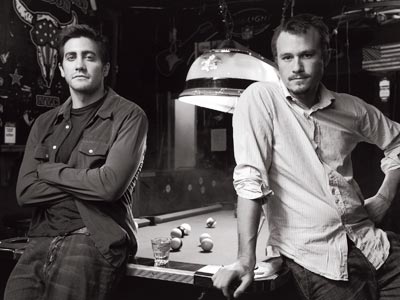
Se estrenó en Nueva York y California el pasado fin de semana arrastrando récords de ingresos por pantalla para 2006, pero informa Omar Cabrera del diario Reforma que Videocine la presentará en México hasta marzo o abril. Será una larga espera...
No sabía, pero comenta el Reforma que Rodrigo Prieto fue el responsable de fotografía para Ang Lee. Bien por él.
La película ya está siendo un parteaguas, y por diferentes razones. Por ejemplo, la asociación de prensa extranjera de Hollywood la nominó en siete categorías, entre ellas Mejor Película, Mejor Director, Mejor Actor, Mejor Guión y Mejor Música Original. Si gana, será la primera película de amor entre dos hombres que lo haga jamás, y quizá repita la hazaña en los Oscar.
¿Y cómo entender las críticas? De fuentes tan disparres y a la vez tan unánimes. Sólo tres:
New York Times rave for Brokeback Mountain: "...Both Mr. Ledger and Mr. Gyllenhaal make this anguished love story physically palpable. Mr. Ledger magically and mysteriously disappears beneath the skin of his lean, sinewy character. It is a great screen performance, as good as the best of Marlon Brando and Sean Penn. The pain and disappointment felt by Jack, who is softer, more self-aware and self-accepting, continually registers in Mr. Gyllenhaal's sad, expectant silver-dollar eyes."
MTV's Kurt Loder: "This is a beautiful movie, and a brave one — and not in a grandstanding, Politically Correct kind of way..."
Catholic News Service: "Looked at from the point of view of the need for love which everyone feels but few people can articulate, the plight of these guys is easy to understand while their way of dealing with it is likely to surprise and shock an audience."
2005 será recordado por los historiadores culturales como el año en que la cultura gay murió como bien afirmó Andrew Sullivan en su ensayo The End of Gay Culture. Ustedes podrían pensar qué cómo se puede decir eso ante el fenómeno de este film, y en el mismo año la legalización de uniones entre ciudadanos del mismo sexo en España, el Reino Unido y Sudáfrica. Pues por esa misma razón: porque lo gay está desapareciendo como alteridad, como otredad, para integrarse a la ciudadanía, a la polis, a la vida de la ciudad, del espacio humano común. Y ya era hora...
Para saber más La Guía sobre Brokeback Mountain de Towleroad.
martes, diciembre 13, 2005
El poder de Skype
John Robb, autor de Global Guerrillas, un gran blog sobre el futuro de la guerra, comenta hoy el poder ecualizador global que representa Skype:
"Sten Tamkivi, the 27-year-old head of Skype's software development: "What Skype has shown the world is that you can take a great idea, with few resources, and conquer the world." (Courtesy, Mark Lander NYT). NOTE: This applies to warfare in the 21st Century too..."
Sí, las cosas simples también pueden ser poderosas, muy poderosas.
"Sten Tamkivi, the 27-year-old head of Skype's software development: "What Skype has shown the world is that you can take a great idea, with few resources, and conquer the world." (Courtesy, Mark Lander NYT). NOTE: This applies to warfare in the 21st Century too..."
Sí, las cosas simples también pueden ser poderosas, muy poderosas.
lunes, diciembre 12, 2005

domingo, diciembre 11, 2005
AMLO promete la luna... pero no dice cómo
Ayer Andrés Manuel López Obrador fue ungido como candidato presidencial del PRD en un acto que llevó al Zócalo de la Ciudad de México al Frente Francisco Villa, pero no a Cuauhtémoc Cárdenas, un acto donde habían muchos ancianos, pero no tantos jóvenes. Afirmó que con su programa de austeridad haría que se ahorrarían 100 mil millones de pesos y que así se producirían empleos... Ajá... Quisiera ver cómo calculó eso. Y prometió la luna:
"Vamos a bajar los precios de la luz, del gas y de las gasolinas. Sí se puede. Lo vamos a hacer para proteger a consumidores y para fomentar la industrialización del país"
¿Alguien sabe cómo va a saber eso si es que gana? Yo que ni él...
Seguramente su idea de vivir en Palacio Nacional - que volvió a repetir ayer - va a provocar más gastos, que si decidiera vivir en Los Pinos. Dice que esa austeridad va a reactivar la economía. Pamplinas. La economía no se va a reactivar con ninguno de los tres candidatos, ya que depende de los ciclos económicos globales, que apuntan más bien a una nueva recesión - sino que depresión - internacional. Lo que el nuevo gobierno debe y puede hacer es prepararse para ello, cambiando las reservas de dólares a euros por ejemplo, y preparándo el sector energético ante la creciente baja de la producción de petróleo. Ahhh, pero AMLO cree que puede reactivar la economía con austeridad. Si supiera como trabajan los burócratas en México... Lo sorprende es que AMLO no haya querido firmar el Pacto de Chapultepec, promovido por empresarios, intelectuales y ya firmado por los otros dos fuertes candidatos. Pista: el Pacto pide que los candidatos acepten el veredicto final del IFE el dos de Julio de 2006.
Y como comentó un señor que participó ayer en la toma de protesta de AMLO, que dice que harán que gane por la buena... o por la mala. La ley - ese consenso básico para toda convivencia civilizada - es lo último que le interesa a Andrés Manuel López Obrador. Toda debilidad, todo problema humano justifica el violarla. Así, sin leyes de por medio, sin consensos mínimos, se desea llevar a México a un mejor futuro. Y yo dudo mucho que eso suceda...
PD. La buena noticia de hoy: 34 universidades públicas aceptan rendir cuentas de sus gastos. Por fin! Ya parecían paraísos fiscales. Lo malo: supervisará la ANUIES, que es juez y parte. ¿Porqué no lo hace alguien independiente? Es sólo pregunta...
"Vamos a bajar los precios de la luz, del gas y de las gasolinas. Sí se puede. Lo vamos a hacer para proteger a consumidores y para fomentar la industrialización del país"
¿Alguien sabe cómo va a saber eso si es que gana? Yo que ni él...
Seguramente su idea de vivir en Palacio Nacional - que volvió a repetir ayer - va a provocar más gastos, que si decidiera vivir en Los Pinos. Dice que esa austeridad va a reactivar la economía. Pamplinas. La economía no se va a reactivar con ninguno de los tres candidatos, ya que depende de los ciclos económicos globales, que apuntan más bien a una nueva recesión - sino que depresión - internacional. Lo que el nuevo gobierno debe y puede hacer es prepararse para ello, cambiando las reservas de dólares a euros por ejemplo, y preparándo el sector energético ante la creciente baja de la producción de petróleo. Ahhh, pero AMLO cree que puede reactivar la economía con austeridad. Si supiera como trabajan los burócratas en México... Lo sorprende es que AMLO no haya querido firmar el Pacto de Chapultepec, promovido por empresarios, intelectuales y ya firmado por los otros dos fuertes candidatos. Pista: el Pacto pide que los candidatos acepten el veredicto final del IFE el dos de Julio de 2006.
Y como comentó un señor que participó ayer en la toma de protesta de AMLO, que dice que harán que gane por la buena... o por la mala. La ley - ese consenso básico para toda convivencia civilizada - es lo último que le interesa a Andrés Manuel López Obrador. Toda debilidad, todo problema humano justifica el violarla. Así, sin leyes de por medio, sin consensos mínimos, se desea llevar a México a un mejor futuro. Y yo dudo mucho que eso suceda...
PD. La buena noticia de hoy: 34 universidades públicas aceptan rendir cuentas de sus gastos. Por fin! Ya parecían paraísos fiscales. Lo malo: supervisará la ANUIES, que es juez y parte. ¿Porqué no lo hace alguien independiente? Es sólo pregunta...
sábado, diciembre 10, 2005

Del cadaver de un imperio
A una sobrina mía la pusieron a estudiar catecismo, y no pude sentirme más apenado, al pensar que ésta niña aprendería las letanías de algo que está muriéndo, y por suicidio.
También lo lamenta en parte Umberto Eco en un reciente artículo que publicó. La lenta agonía de la iglesia católica - y de toda la religión institucional - está dejando un hueco de poder, semejante al que ocurrió cuando el Imperio Romano cayó creo yo. Y él comenta que lo está llenado, que no sé si es tan malo como él opina:
"The "death of God", or at least the dying of the Christian God, has been accompanied by the birth of a plethora of new idols. They have multiplied like bacteria on the corpse of the Christian Church -- from strange pagan cults and sects to the silly, sub-Christian superstitions of The Da Vinci Code..."
Sí, como a fines de todo imperio, los viejos dioses regresan a tomar su rol. El viejo mitólogo francés Georges Dumézil ya lo decía en 1990 en una entrevista con la revista Actuel, las crisis hacen que los viejos mitos regresen. Y están regresando. Vean cuantos mexicanos no creen en el viejo mito del Quetzalcoalt mesías. Lo verán en el 2006. Pero quizá no sea el viejo Quetzalcoatl quien venga, me pregunto si no sería su hermano, Tezcaltipoca...
También lo lamenta en parte Umberto Eco en un reciente artículo que publicó. La lenta agonía de la iglesia católica - y de toda la religión institucional - está dejando un hueco de poder, semejante al que ocurrió cuando el Imperio Romano cayó creo yo. Y él comenta que lo está llenado, que no sé si es tan malo como él opina:
"The "death of God", or at least the dying of the Christian God, has been accompanied by the birth of a plethora of new idols. They have multiplied like bacteria on the corpse of the Christian Church -- from strange pagan cults and sects to the silly, sub-Christian superstitions of The Da Vinci Code..."
Sí, como a fines de todo imperio, los viejos dioses regresan a tomar su rol. El viejo mitólogo francés Georges Dumézil ya lo decía en 1990 en una entrevista con la revista Actuel, las crisis hacen que los viejos mitos regresen. Y están regresando. Vean cuantos mexicanos no creen en el viejo mito del Quetzalcoalt mesías. Lo verán en el 2006. Pero quizá no sea el viejo Quetzalcoatl quien venga, me pregunto si no sería su hermano, Tezcaltipoca...
Suscribirse a:
Entradas (Atom)