Mostrando las entradas con la etiqueta estilo de vida. Mostrar todas las entradas

martes, agosto 18, 2009

Duelos en tiempo de Facebook

Un interesante texto acerca de la ausencia, la personhood como dicen en inglés y la muerte en tiempos de internet, por José Merino en La Lonchería:

El duelo en tiempos del Facebook

Pensé días y días sobre escribir o no este texto.

¿Qué se hace cuando un amigo muere y quedan su facebook, su dirección en tu msn, su blog?

Hace casi cinco meses murió mi amigo Christian Gaudí y apenas voy entendiendo que los duelos son lentos y tramposos. Me dolió de inmediato su pérdida, entender que no lo vería más, ver sufir a todos quienes lo querían… pero es hasta ahora que su ausencia me pesa.

En gran parte me tardé en sentarme y escribir esto, porque siento que me cuelo en una cola de gentes que eran mucho más cercanas a Christian. Y sí, hay al menos un docena de nombres que se me ocurren más indispensables, memorables y sistemáticos que el mío.

Sucede que áun lo extraño.

¿Te ha pasado que a veces dejas de ver a un amigo o familiar, y en una semana lo sueñas o lo recuerdas, y su rostro se te queda pegado? Entonces le marcas, le escribes, y esa su repentina aparición en tu cabeza se vuelve una razón perfecta para volver a verlo.

Llevo dos semanas con Gaudí atascado en mi cabeza, quiero verlo, salir con él, beber con él, hablar con él. No hay modo.

Christian no era ni el más antiguo ni quizás el más entrañable de mis amigos, pero nos unía una complicidad alucinante y un cariño inmediato. Por unos cuatro meses nos volvimos inseparables y mi semana estaba llena con él. Estaba presente… y apenas entiendo como ése es un atributo poco común y harto atesorable.

Su nombre sigue en mi lista de contactos en msn, y no pienso borrarlo. No existe la promesa de que algún día al lado diga ‘online’, pero tenerlo ahí me genera una sonrisa cada vez que lo veo. Aún regreso a su blog y leo y releo cosas que escribió, no como obsesión, pero hacerlo me ayuda a recordarlo: su tono de voz, las palabrejas que usaba, las cosas que le entusiasmaban. No quiero olvidar esos detalles.

Y queda el facebook y esos mensajes spam que te dicen que Christian te mandó un mensaje y la primera vez te dejan blanco, o el duelo de otros que los lleva a taggear a Christian en fotos y textos… ‘Christian Gaudí has been tagged’, y aparece una foto nueva.

Y su facebook mismo…

Desde su muerte, había entrado un par de veces, nada más. Había visto cómo otros le habían escrito cosas, y aunque me conmovía (siempre), no entendía la razón para hacerlo. Hace un par de días, cuando de verdad sentía la necesidad de hablar con él, le escribí un mensaje ahí.

Me sentí mejor al instante. No sé si por haberme permitido el ‘absurdo’, no sé si por tener al menos una ventanita donde contarle que lo extraño, no sé si por el ejercicio simple de escribirle algo donde fuese…

¿Qué se hace con el facebook de alquien cercano que muere?… lo usas.

miércoles, abril 01, 2009

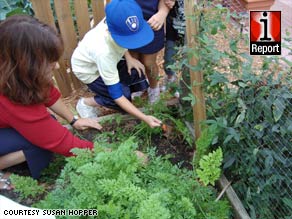
Crecen huertas familiares contra la crisis económica en Estados Unidos

John Robb ya había reportado sobre esta tendencia, y ahora lo hace CNN: crecen el número de estadounidenses que para paliar los efectos de la crisis económica han empezado a cultivar sus propias legumbres en huertos familiares o comunitarios. Lo bueno de la una crisis es que sacude la creatividad, que muchas veces se vuelve acomodaticia, y creará quizá mejores habitos de alimentación y salud en general. Es un buen ejemplo para emular, y que ayuda a crear comunidades con resiliencia ante el fuerte golpe de la crisis global. Copio de CNN:

(CNN) -- As American families try to stretch their food budgets during the recession, some are turning to the backyard, rather than the grocery store, as the place to look for produce.

Susan Hopper of Tampa, Florida, uses her garden to teach her students where food comes from.

Susan Hopper of Tampa, Florida, uses her garden to teach her students where food comes from.

Recession gardens are catching on with many first-time planters who want a healthy meal at an affordable price.

The gardeners are following seed-strewn paths laid by Michelle Obama and Eleanor Roosevelt, both of whom have used the White House lawn to show the value of a garden during tough times.

The scope of today's trend is shocking even to those in the gardening industry.

W. Atlee Burpee & Co., the largest seed and gardening supply store in the country, says it has seen a 25 to 30 percent spike in vegetable seed and plant sales this spring compared with last.

"I've been in the business for 30 years, and I've never seen anything like it -- even remotely like it," said George Ball, chairman and CEO of the company.

In 2008, there was a 15 to 20 percent uptick in seed sales because of high food and gasoline prices. Not since the '70s, when the company saw sales increases in the 10 percent range, has gardening seen such buzz, he said.

The National Gardening Association expects 43 million American households to grow their own fruits, vegetables, herbs and berries this year. That's up 19 percent over last year, according to a 2,559-household survey the group conducted in January.


jueves, enero 29, 2009

¿Quién está sobreviviendo a la crisis global?

http://www.slipperybrick.com/wp-content/uploads/2008/05/atari.jpg

Los bancos están en problemas, qué decir de las automotrices. Hasta compañías que atienden a las clases media alta y alta como Starbucks y Chanel están despidiendo a miles. Parece que nadie está a salvo de esta crisis económica global. Pues sí, y esa empresa es Nintendo. ¿Qué quiere decir eso?

Que mucha gente está comprando sus consolas Wii y DS, y por una poderosa razón. La gente se podrá quedar en casa desempleada, pero no se quiere aburrir. Y el Wii y la DS a diferencia del Playstation y el XBox ayudan además a hacer ejercicio! La gente está dejando de ir al cine o al teatro, y la inseguridad también hace que prefiera quedarse en casa. Desempleados pero no aburridos parece ser la moraleja...

miércoles, enero 28, 2009

Flower: hermoso juego de vídeo para relajarse

Parece que la moda zen ha llegado al mundo de los juegos de vídeo. Ya no solo se pueden pilotear autos o jugar tennis, sino que se puede jugar a ser el viento en un pradera y llevar petalos de flor a flor. ¿Cursi? Quizá, pero suena muy relajante para noches de insomnio o para días de lluvía y cuando no hay en la tele. Quizá "viajar" de esta forma se ponga de moda pronto. Flower es un juego para Playstation 3 y saldrá en Estados Unidos en febrero. Copio de Towleroad y pego un vídeo del juego hecho por un fan de este que apropiadamente le puso la canción "Gold in the Air of Summer" de los lindos Kings of Convenience:

Flower: Zen Gaming

Flower

Here's a game for the Playstation 3 that's getting some attention.

Joystiq writes: "The premise is simple. You are a gust of wind inside a flower's dream and you must carry petals to other flowers in order to progress to the end of the level. There's no time limit, no hazards, no points system and, really, no way to fail."

Flower2Dean Takahashi of VentureBeat writes: "The game is pure eye candy — I haven’t seen anything like it. Describe it in words? It’s a first-person plant game. It takes enormous computational power — all of the power of the IBM cell microprocessor and Nvidia graphics chip inside the PlayStation 3 — to render a hundred thousand individual blades of grass that sway in the wind. Through music and colorful graphics, you embark on a complex emotional journey. Flower is pure artistic inspiration at its best. It’s almost like watching an IMAX movie in a curved theater — except you get to direct which way the camera turns."

I guess it's sort of the anti-Grand Theft Auto. Ideas like this make me wish for more innovation in gaming. Sometimes the simplest games are the best (Wii tennis!). In any case, this sounds like a good treatment for stress, at least in the short term.


lunes, diciembre 08, 2008

Las marcas de gran lujo empiezan a sufrir

Joyas de Bulgari


The New York Times reporta sobre como Bulgari, Cartier y otras marcas están recortando gastos ante el creciente golpe de una recesión global - que bien podría convertirse en depresión. Copio:

In Bulgari’s case, if Mr. Trapani, the company’s chief executive, cuts too deeply, he risks harming the brand’s image of opulence and exclusivity, carefully honed over decades and reinforced by stars like Nicole Kidman, Charlize Theron and Scarlett Johansson, wearing Bulgari on red carpets at Cannes or the Oscars.“Instead of talking about stars and spending, you think about cutting costs,” Mr. Trapani said during an interview in his office overlooking the Tiber. “Luxury is not immune.”

with the company’s profit plunging 44 percent in the most recent quarter, and its stock suddenly tarnished, he has no choice. Shares closed Thursday at 4.76 euros, less than half what they were a year ago.

Since the 1990s, sales of luxury goods have exploded, along with the growth of a well-heeled new global elite, turning once little-known European brands into giants and transforming chic addresses like Fifth Avenue, Bond Street and the Champs-Élysées into veritable open-air malls for the upper middle class.

Few brands epitomized this trend better than Bulgari, which has grown to 259 stores from just 5 when Mr. Trapani took over as chief executive in 1984. Demand for Bulgari’s bold combinations of sapphires, diamonds and emeralds seemed insatiable as sales boomed worldwide, lifting the company’s revenue to more than 1.1 billion euros, or $1.41 billion.

Even as Wall Street collapsed this fall, Mr. Trapani presided over the star-studded opening of the flagship Bulgari store in Paris, and the debut of its first company-owned boutique in the Middle East, with separate parties for men and women in Qatar.

Now, reality has caught up with Bulgari and the rest of the industry. Sales at the 125-year-old jeweler rose an anemic 2 percent in the third quarter. Analysts are pessimistic about a recovery in its current fourth quarter, a period that is responsible for an outsize portion of the company’s annual results. And demand for luxury goods is expected to drop by 3 to 7 percent next year, according to a recent study by Bain & Company, the first time the sector has recorded an annual sales decrease since Bain began tracking it in the early 1990s.

There is no sign of a pre-Christmas rush at Bulgari’s boutique on the Via Condotti, where Richard Burton once bought diamonds for Elizabeth Taylor, and where unique pieces start at 70,000 euros, or $88,900.

“It’s not politically correct to show off in this environment,” said Claudia D’Arpizio, a partner at Bain who specializes in luxury goods. “Even if they’re not affected in terms of purchasing power, consumers feel it’s ethical to spend less. They don’t want the additional piece of jewelry.”

In response to the times, Mr. Trapani has embarked on broad cost-cutting that includes shelving plans for new stores, except in locations where leases have already been signed.

Burberry has announced a similar initiative, while Richemont, the owner of Cartier and Montblanc, is limiting openings to a few fast-growing markets in the Middle East and Asia.

“Past slowdowns were more regional in nature and people could perceive the end game,” Angela Ahrendts, Burberry’s chief executive, said in an interview. “This is global. We were with an investor last week who has had to rerun his worst-case scenario five times in the last five months, and we’re still not there yet.”

Bulgari is also renegotiating existing leases with landlords to save on rent, Mr. Trapani said, and even pressing suppliers for better deals on diamonds, sapphires and other precious stones that are the raw material of its most expensive creations.

jueves, noviembre 06, 2008

Merluza con papas


Día caótico en la Ciudad de México: tráfico, tráfico y más tráfico, y claro ruido y más ruido. Para descansar, ¿qué tal si preparamos este fin de semana merluza con papas con una buena copa de vino blanco? Cortesía de El Cocinero Fiel y sus magníficos vídeos.

miércoles, octubre 01, 2008

NY: si el gobierno no puede mantener el metro, que lo haga la publicidad

La crisis económica está sacando la creatividad capitalista hasta en el metro de Nueva York: el gobierno de la ciudad presentará el prototipo del primer metro envuelto en publicidad. Creo que esta crisis tendrá para muchas industrias, como la publicitaria, muchas oportunidades...

NYC Set To Unveil First Subway Car Wrapped In Ads

Cash-Strapped Metropolitan Transportation Authority Looking For Any Way To Bite Into $900 Million Deficit

NEW YORK (AP) ― A New York City transit agency says it plans to unveil its first subway car to be fully wrapped in advertising.

Metropolitan Transportation Authority officials say on Thursday they'll present a midtown Manhattan shuttle train ensconced in advertising for The History Channel.

Thousands of tourists, commuters and residents see the shuttle, which runs between Grand Central Terminal and Times Square.

The MTA faces a projected deficit next year of nearly $900 million. In recent years it has raised fares for subways, buses and two regional rail lines and tolls for bridges.

It also has begun exploring the possibility of cutting subway, bus and commuter rail service.

An MTA spokesman won't say how much revenue the new ad will generate.

jueves, septiembre 11, 2008

Clave para un buen matrimonio:cómo se usa el dinero

El New York Times habla sobre uno de los temas tabus en las relaciones amorosas, pero a la vez uno de los más vitales: el cómo se usa el dinero. Y resume su investigación en un pensamiento: si le preguntan a parejas honestas porqué su matrimonio funciona, quizá sea porque tanto como el sexo y otras cosas, es el saber cómo el tener unas finanzas sanas. Un muy interesante artículo que ayuda a romper mitos y que recomiendan varias ideas para tener buenas finanzas en pareja, una es el manejar el dinero de la casa como si de una empresa se tratara, y otra claro es hablar del tema y poner metas...


jueves, agosto 21, 2008

El atleta mexicano que trastoca el concepto de nacionalidad

El verbo trastocar me gusta, es como trasnformar pero sin transtornar, jeje. Y eso es lo que hace Larry Langowski, un joven de 23 años de la delegación mexicana en Beijing, el único representante de lucha greco romana. El New York Times cuenta hoy su historia. Copio un fragmento:

One-Man Melting Pot Makes Up the One-Man Wrestling Team for Mexico

Published: August 20, 2008

BEIJING — Inside an authentic Mexican restaurant, the mariachi band played “Guantanamera” while the one-man melting pot walked inside. “Hola,” Larry Langowski said.

Only at the Olympics could one expect to find an athlete like Langowski, a self-described Polexican — part Polish, part Mexican — who lives in Chicago, runs the family-owned Italian gelato cafe and is the sole member of the Mexican wrestling team: four cultures blended into one man. He was on his way into a Mexican restaurant that serves an Olympic parrillada: a combination of chicken, beef, chorizo, cheese, fried fish, fresh shrimp and refried beans, served with corn tortillas.

“Taste delicious taco, feel real Olympic,” the menu says. The one-man melting pot is feeling real Olympic these days. He lives in the Olympic Village. He eats in the spacious dining hall. He hopes to run into the American softball player Jennie Finch. Maybe he can explain to her just how he got here, just what he represents.

“I’m the product of different cultures,” Langowski said, finishing off a bowl of tortilla soup. “I’ve been to a lot of cool places, done a lot of cool things. That all pretty much mixes into who I am.”

He can say grandma in three languages. He speaks fluent English and Spanish. At Heavenly, the cafe where his family serves eight types of gelato in the Logan Square neighborhood of Chicago, people mistake him for Italian, even Greek. At Mexican restaurants back home, waitresses ask if he is Cuban after he orders in Spanish.

People gravitate to his story because it seems humorous. (So this Polish guy from Chicago who makes up the Mexican wrestling team walked into a bar. ...)

But there is another story about how he became the melting pot, about how he ended up at these Olympics, wearing a fanny pack with a Mexican flag on it.

viernes, agosto 08, 2008

El café: más beneficos efectos en la salud de los que se creía

http://scienceblogs.com/retrospectacle/upload/2007/08/coffee%20poster.bmp


No solo es una bebida deliciosa, sino que previene de graves enfermedades incurables, como el Parkinson y la diabetes tipo 2. Y es el café tiene gran cantidad de antioxidantes, muchos más que el famoso té verde. Así que ya lo saben tomen café, pero que sea descafeinado, solo así sus propiedades preventivas perduran. Copio del blog de Andrew Sullivan:

Coffee As A Health Food

08 Aug 2008 07:17 am

Relax - no real side-effects in moderation and considerable benefits:

Recent disease-related findings can only add to coffee’s popularity. A review of 13 studies found that people who drank caffeinated coffee, but not decaf, had a 30 percent lower risk of Parkinson’s disease.

Another review found that compared with noncoffee drinkers, people who drank four to six cups of coffee a day, with or without caffeine, had a 28 percent lower risk of Type 2 diabetes. This benefit probably comes from coffee’s antioxidants and chlorogenic acid.


jueves, julio 31, 2008

La última moda en campamentos de verano

Claro, para tiempos apocalípticos como los actuales, campamentos donde los adultos aprenden a sobrevivir a casi todo. Copio del New York Times:

They Will Survive
Les Stone for The New York Times
They Will Survive

Spending a weekend learning to signal for help with a soda can, start a fire with a cellphone and snare a squirrel for lunch.

sábado, julio 19, 2008

La historia social del prado, cesped, pasto...

Mowing
Escribe Patrick Appel en el blog de Andrew Sullivan en referencia a la historia del cesped en Estados Unidos:

Elizabeth Kolbert gives a brief history of the American lawn:


What began as a symbol of privilege and evolved into an expression of shared values has now come to represent expedience. We no longer choose to keep lawns; we just keep on keeping them. In the meantime, the familiar image of Dad cutting the grass and then, beer in hand, sitting back to admire his work, is, in many communities, a fiction: increasingly, lawn care has become another one of those jobs, like cooking dinner or playing with the kids, that’s outsourced to someone else.


(Imagen de Flikr por great sea.)

Y en Inglaterra el Partido Conservador piensa hacer un sacrilegio: permitir la tala del cinturón verde de árboles que rodean a las principales ciudades del Reino Unido para construir casas. Sacrilegio digo que es conociendo la antigua filia británica por los jardines. Parece que Tolkien veía algo cuando Mordor se aprestaba a talar el bosque sagrado...


lunes, julio 14, 2008

Sayonara Shinto


El New York Times examina la muerte del budismo en Japón. Parece que la ciencia poco a poco desplaza en todas partes a las ideologias competidoras, por más tradicionales que sean, o quizá por eso mismo...

sábado, julio 05, 2008

Consejos para las rebajas de verano


Ayer me fuí a aprovechar las rebajas de verano, comprando dos camisas con 40% de descuento. en una tienda departamental de la calle de Durango. No soy muy de marcas, pero eran de Epsilon, una muy buena marca de ropa colombiana que usa muy buena tela. Pero apenas empieza la temporada de baratas, y como están las cosas hay que aprovecharla. Creo este vídeo de la agencia EFE puede dar buenos consejos...


lunes, junio 30, 2008

¿Legalizar el matrimonio gay es bueno para los deportes?

La evidencia anecdótica parece divertida al menos, ya que los deportes siempre son un buen termometro social:

[L]egalizing gay marriage is good for sports teams. Spain did it a few years back, and wham, they win the Euro for the first time since 1964. Canada did it just before the 2006 Winter Olympics, and bingo, they had their best-ever medal haul. South Africa legalized gay marriage in 2006, and won the Rugby World Cup the following year. Massachusetts gave same-sex couples the right to wed a few years ago — and ask Red Sox and Celtic fans about how nicely things have gone for their teams since. For all those folks who insist that God’s punishment for gay marriage will be obvious, so far the evidence is, um, lacking. The evidence for the opposite is growing.

Más: sobre el problema de la homofobia en el mundo deportivo.


jueves, junio 19, 2008

Thonet: vanguardias de diseño 1830-2008

THONET Vanguardias de diseño 1830-2008  INAUGURACIÓN Miércoles 25 de junio, 2008 - 19:30 horas  MESA REDONDA ¿Vanguardias de diseño? Sábado 28 de junio, 2008  -  12:00 horas


Se inaugura el 25 de junio a las 19.30 en el Museo Franz Mayer, en el Centro Histórico de la Ciudad de México. La curaduría es de Ana Elena Mallet.

sábado, junio 07, 2008

¿El fin del toreo?

El New York Times, el diario más influyente del mundo, escribe hoy que el toreo está muerto, y yo interpreto que es por la llegada de nuevos valores sociales en España. Disminuyen los valores materiales y crecen los valores postmateriales, como los llama el estudioso de encuestas Ronald Inglehart. En lo personal el toreo no me molesta mucho, aunque no entiendo las ganas de hacer sufrir a un animal, aunque sea bravo como es el toro. El toro solo de defiende, el torero solo ataca. Uno está solo, el otro tiene muchas ayudas. El psicodrama del daño o muerte de toreros se me hace gratuito, cuando es el toro el que llevado a defenderse, y no alrevés. Creo que la sociedad puede canalizar su energía en cosas más útiles, que en matar toros por placer. Por algo no se permiten las peleas de perros: el hacer dinero a costa del dolor animal nos rebaja como especie. Y si tuviera que elegir entre permitir el toreo o no, creo que lo segundo sería mejor.

Es un texto largo, copio un fragmento:

Bullfighting Is Dead! Long Live the Bullfight!

Jose Luis Roca/Agence France-Presse — Getty Images

José Tomás performing last year in Algeciras, Spain. His grace and artistry - some would call it savagery - make him wildly popular with the fans.


Published: June 1, 2008

It was the time of Las Fallas, the annual spring festival in Valencia. Giant papier-mâché cartoon floats of Sinbad and Snow White and troupes of amateur dancers with lacquered hair and sequined outfits jammed the old city squares. Spanish matrons and women in evening dresses joined the teenagers and the men in business suits thronging the plaza de toros. The matador José Tomás had come to fight.

By 5 o’clock a mob toting slim, white plastic seat cushions had jammed onto the cement benches of the arena. I was there, like everyone else, to see José Tomás, and found myself sandwiched between an elderly, rheumy-eyed Valencian in a porkpie hat and a bullfighting announcer for Spanish television on a busman’s holiday from Madrid who was working a thick stogie. The smells of wet clay, manure and sand gave way to after-shave and cigar smoke.

José Tomás Román Martín — fans call him by his double-barreled first name, José Tomás, or just Tomás — is a mystical figure in Spain. Quixotic, prone to public squabbling with bullfighting’s notoriously sleazy promoters and rarely given to speaking to the media, he keeps largely apart from his fellow matadors and fights much more infrequently than they do. His remoteness, in one respect, speaks to bullfighting’s disengagement with a growing segment of Spain, though his artistry and grace, along with his fearlessness (it shocks other matadors), make him a figure of widespread fascination. The contradiction seems to encapsulate something deep in the Spanish psyche.

The announcement of his appearance in Valencia caused a scramble across the country for tickets, and old Spain, the Spain that still loves bullfighting, turned out in full. When Mariano Rajoy, the head of Spain’s conservative Popular Party, who had just lost the election to the Socialist José Luis Rodríguez Zapatero, entered the arena, he received a thunderous ovation, something that didn’t much happen to him out on the campaign trail. “He will yet be the ruin of Zapatero!” murmured a red-faced man, to no one in particular. I spotted Tomás’s father a few seats over — short, gray-haired, bespectacled, in crew-neck sweater and slacks, staring anxiously into space. Everyone now stood, expectant. Then a brass band struck up; the matadors, after first crossing themselves, paraded into the ring behind white horses; and the crowd finally settled down to wait for José Tomás.

AS SPAIN GOES, so goes toreo, or bullfighting. That’s the old adage. During the 1940s, Manolete was a matador of stoic gravity, reflecting the rueful mood of a country coming out of bloody civil war under a dictatorship. During the 1960s, the mop-topped El Cordobés, a hot-dog and a rule breaker in the ring, personified the opening up of the nation after years of isolation. In the ’90s, Espartaco was called a technocrat for a technocratic era. This sort of metaphor is glib, but there is nonetheless something to the notion that you can read Spain through bullfighting.

Today, along with José Tomás, a variety of other gifted matadors have emerged — among them Enrique Ponce, El Juli, Cayetano Rivera Ordóñez, Morante de la Puebla, Juan Bautista, Miguel Ángel Perera — at precisely a moment when the country apparently cares less than ever about what they do. It’s also revealing of Spain’s curious divide between indifference and fascination that several of the more flamboyant and handsome toreros (bullfighters) occupy the gossip pages the way Spanish soccer stars do.

But first things first. Aficionados will rightly tell you that toreo is not a sport; in Spanish newspapers, it is never featured on the sports pages. Sport implies a fair fight between willing opponents. Except in the unusual case that a bull is spared for having shown exceptional bravery in the ring, all the bulls die. Even in Portugal, where bulls aren’t killed in the ring, they are killed afterward, a hypocrisy that spares the spectator but not the animal. Every lidia — an individual bullfight between a bull and a matador — is a ritual orchestrated to injure and then exhaust the animal so that it can be more easily killed. Whatever that is (and opponents call it torture), it’s not sporting.


martes, junio 03, 2008

Viaje a León

Estos días pasados estuve en León, Guanajuato, para ir a una boda, y fue una experiencia interesante el observar de cerca el crecimiento de la diversidad social, aún en una de las zonas más conservadoras del país.

Y es que no solo se llenaban las iglesias el fin de semana - el viernes para la fiesta del Sagrado Corazón y el domingo para la misa ordinaria - sino que también varios de los antros gays que existen en el centro de la ciudad, que no le piden nada a los de la capital.

León no es en sí una ciudad liberal o conservadora me decía una persona, sino una muy hipócrita. La juventud de clase alta es sexualmente activa y eso no le impide ir a misa después de una noche de fiesta. El centro de la ciudad está lleno de tiendas de decoración religiosa - católica claro - pero está rodeada de hoteles de paso....

León no se ha dado cuenta de lo importante que es, la prueba de ello es que tiene una sociedad civil organizada muy incipiente, acorralada por la iglesia católica. La ciencia vive escondida en las universidades y un museo interactivo, mientras que el arzobispo hace marchas públicas a su antojo. Pero poco a poco se crean espacios nuevos y diferentes: el viernes en la noche hubo un concierto de ska en una plaza del centro, y al lado uno grupo de talentosos B Boys demostraban sus hazañas de baile, ah y hasta ví a pocos jóvenes emos y darks. Y bueno, hay cines y malls, donde la clase media desahoga las tensiones de su ego. La clase media alta casas de playa en Vallarta, y claro el famoso club de charrería. Aunque una de las chicas que van a este último se quejaba conmigo, que aunque a pesar que los hombres que van a hacer charrería son muy guapos, o están casados, o son gays, o los dos. A lo que le me pregunto: ¿qué se puede esperar?

Los jóvenes heterosexuales de León tienen pocas opciones en una ciudad envuelta en la comedia musical, sea la de la iglesia - que bonitos cantos escuché el viernes en el hermoso templo de la expiación - o en las fiestas charras.... Pero lo olvidaba, tienen la opción de ir a perderse cada año a la fiesta de San Marcos a Aguascalientes, que queda a una hora en carretera.


domingo, mayo 25, 2008

Sobrevivir en Manhattan

Son jóvenes americanos, blancos... y para vivir en Manhattan hacen todo tipo de sacrificios imaginables. Mal comen, mal duermen.... pero aún así logran trabajar y divertirse. Copio un fragmento:

"Before moving from San Francisco last fall, Ms. Werkheiser realized that paying salon prices for platinum tresses in New York would require cutting back on needs like food and shelter. “So I went natural,” said Ms. Werkheiser. “I dyed it dark, a New York brunette.”

She and her friends have also located just about every B.Y.O.B. brunch spot in the city, plotting them out on Google maps. The cost-consciousness, Ms. Werkheiser says, is worth it: She adores New York and lives, with two roommates, in a $3,450-a-month three-bedroom apartment on the Lower East Side, verily the center of the universe for Manhattan’s young and hip.

Drinking and eating carry their own complications. Especially if you are, say, Noah Driscoll, a 25-year-old project manager for a Chelsea marketing company whose salary is comparable to what a rookie teacher might make.

“For a little while I only ate grapefruits for my lunch,” said Mr. Driscoll, who pays $400 a month on his college loans, “because they have a lot of nutrients and they got me through the day.”


Un interesante ejercicio de sociología de la pobreza voluntaria realizado por el NYT.

lunes, abril 21, 2008

Racionamiento de alimentos llega a Estados Unidos

Palo Alto y Mountain View están cerca de San Francisco, California, una de las zonas más ricas de la Tierra. Ahí trabajan muchos ingenieros emigrados de Asia, pero cual fue su sorpresa al descubrir en sus compras cotidianas de alacena que ya no había arroz... Así es, en muchas zonas de Estados Unidos se está limitando la compra de alimentos debido al aumento de la demanda. Lo impensable ha ocurrido: racionamiento de alimentos en Estados Unidos. Ahora sí, parece que se está en guerra, pero el enemigo no es Irak, sino el aumento de los precios del petróleo (que ha encarecido el transporte mundial), el aumento de compras de alimentos por unas más ricas India y China y el cambio climático, que parece provocó una gran sequía en Australia.

El golpe psicólogico para los consumidores americanos será enorme. Un cisne negro se ha aparecido, algo no pensado se ha vuelto real. Copio del Sun de Nueva York:

Food Rationing Confronts Breadbasket of the World

By JOSH GERSTEIN
Staff Reporter of the Sun
April 21, 2008


MOUNTAIN VIEW, Calif. — Many parts of America, long considered the breadbasket of the world, are now confronting a once unthinkable phenomenon: food rationing. Major retailers in New York, in areas of New England, and on the West Coast are limiting purchases of flour, rice, and cooking oil as demand outstrips supply. There are also anecdotal reports that some consumers are hoarding grain stocks.


At a Costco Warehouse in Mountain View, Calif., yesterday, shoppers grew frustrated and occasionally uttered expletives as they searched in vain for the large sacks of rice they usually buy.


"Where's the rice?" an engineer from Palo Alto, Calif., Yajun Liu, said. "You should be able to buy something like rice. This is ridiculous."


The bustling store in the heart of Silicon Valley usually sells four or five varieties of rice to a clientele largely of Asian immigrants, but only about half a pallet of Indian-grown Basmati rice was left in stock. A 20-pound bag was selling for $15.99.


"You can't eat this every day. It's too heavy," a health care executive from Palo Alto, Sharad Patel, grumbled as his son loaded two sacks of the Basmati into a shopping cart. "We only need one bag but I'm getting two in case a neighbor or a friend needs it," the elder man said.


PD. El NYT reporta que la crisis económica está reduciendo la resistencia en EU a los alimentos transgénicos.